
Last updated September 10, 2026
Full 25-point door and opener safety check with every visit - springs, cables, rollers, tracks, and your LiftMaster or Chamberlain opener included
You get a price before we start. It does not change when the truck arrives.
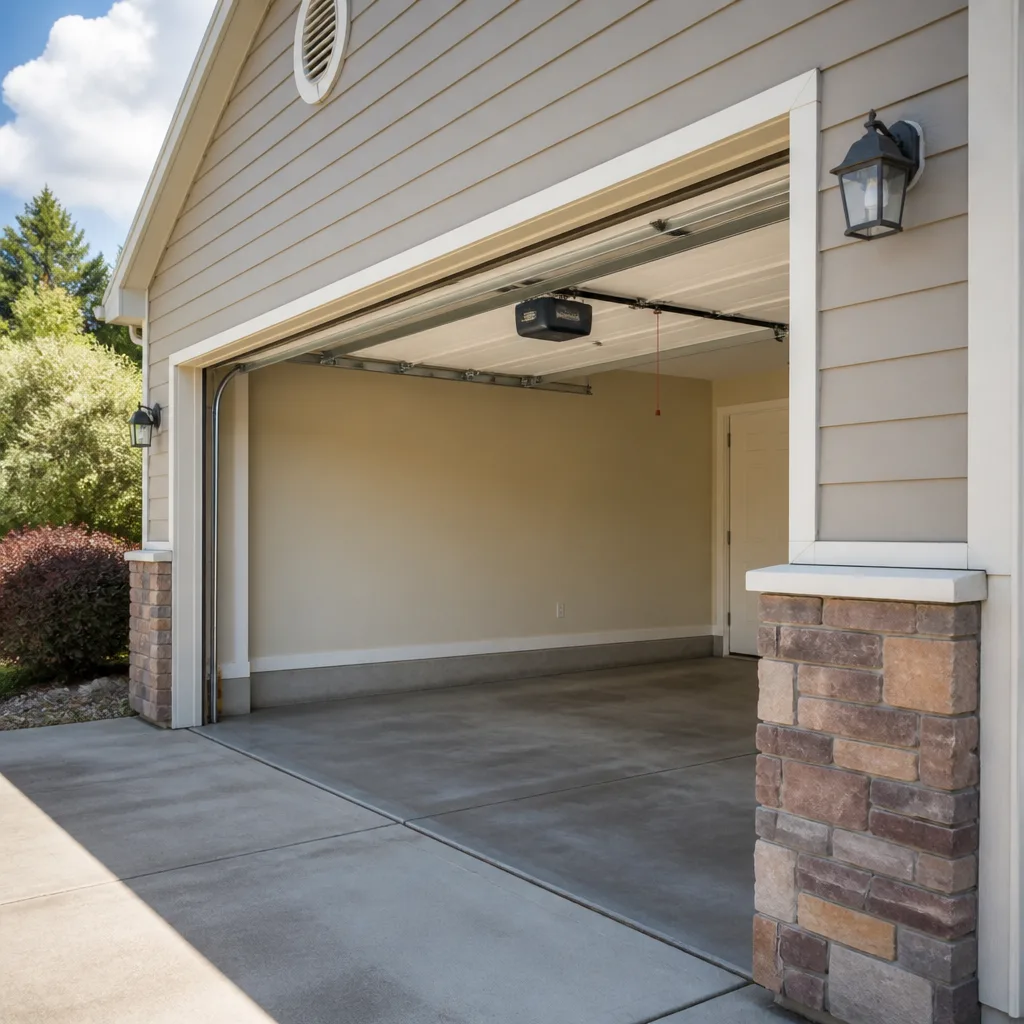
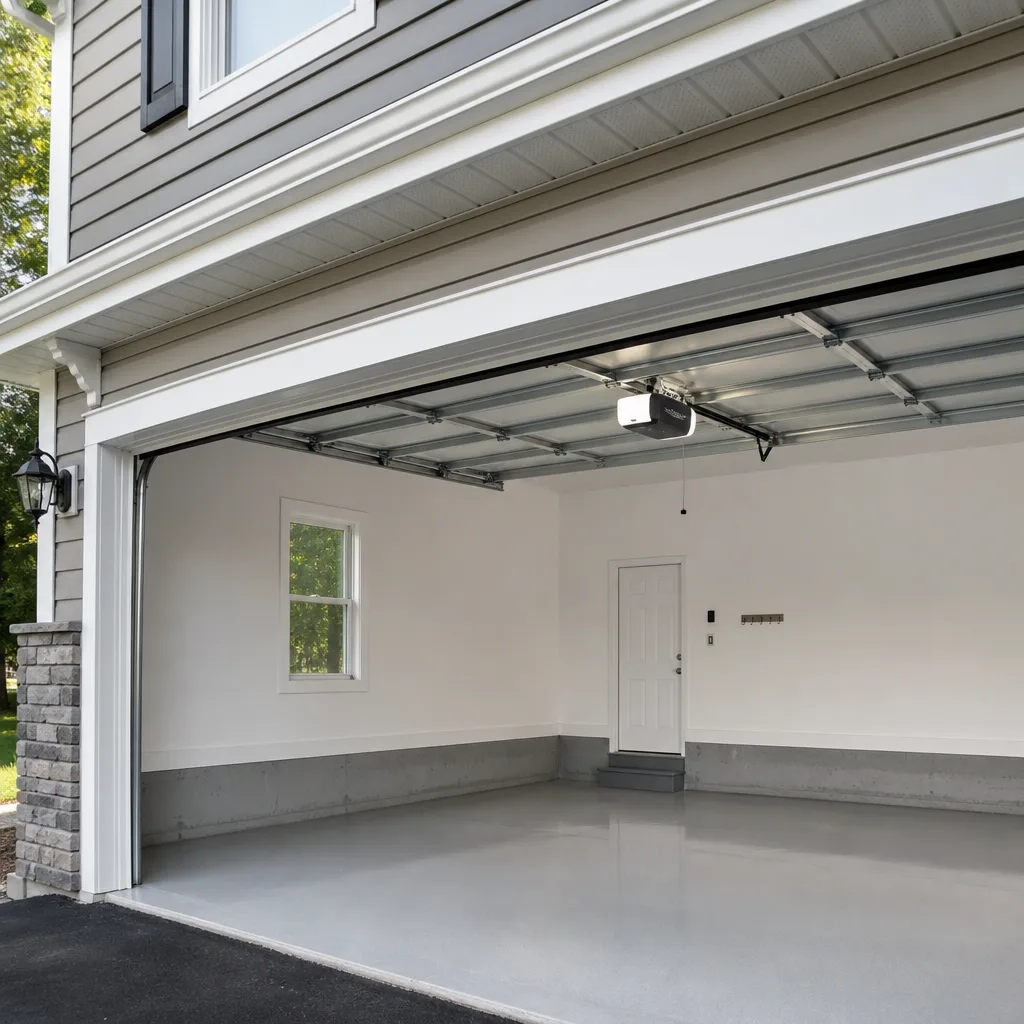
 Before
 After
After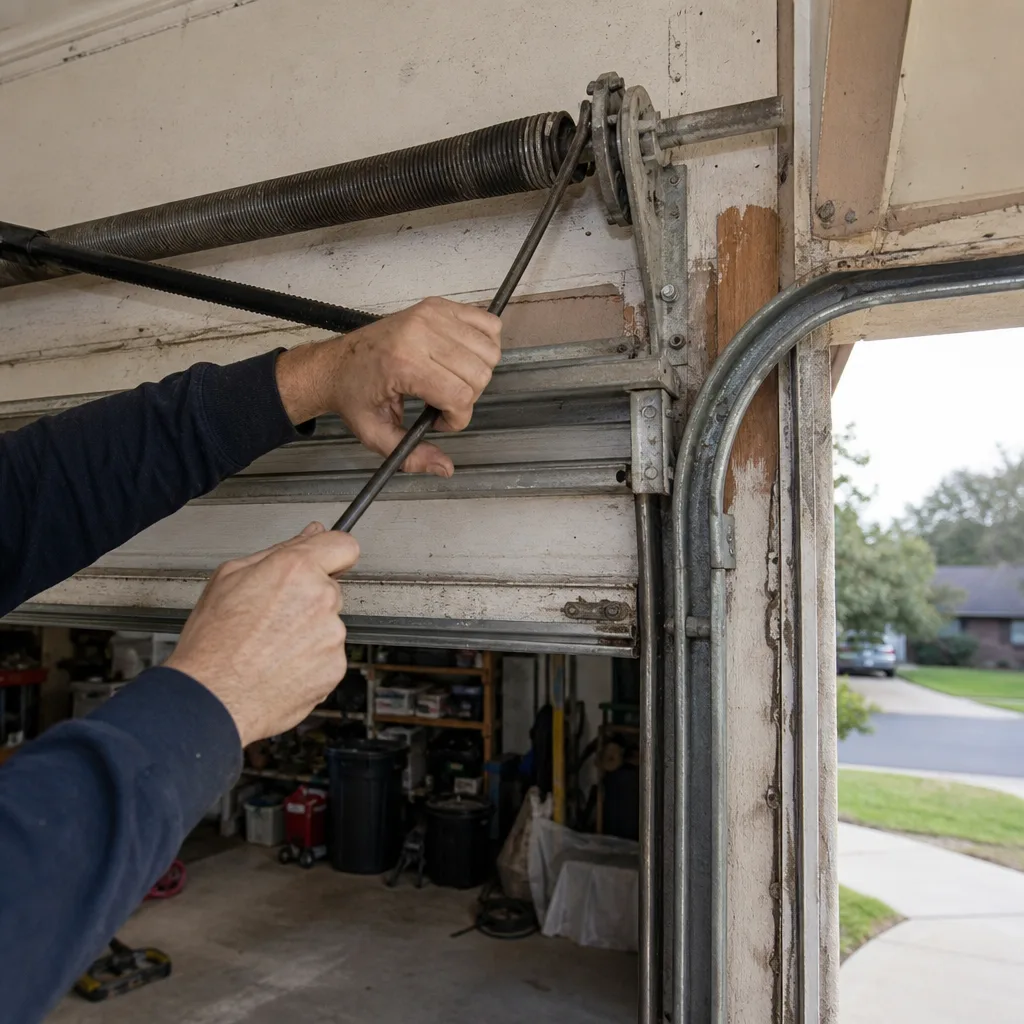 Before
 After
After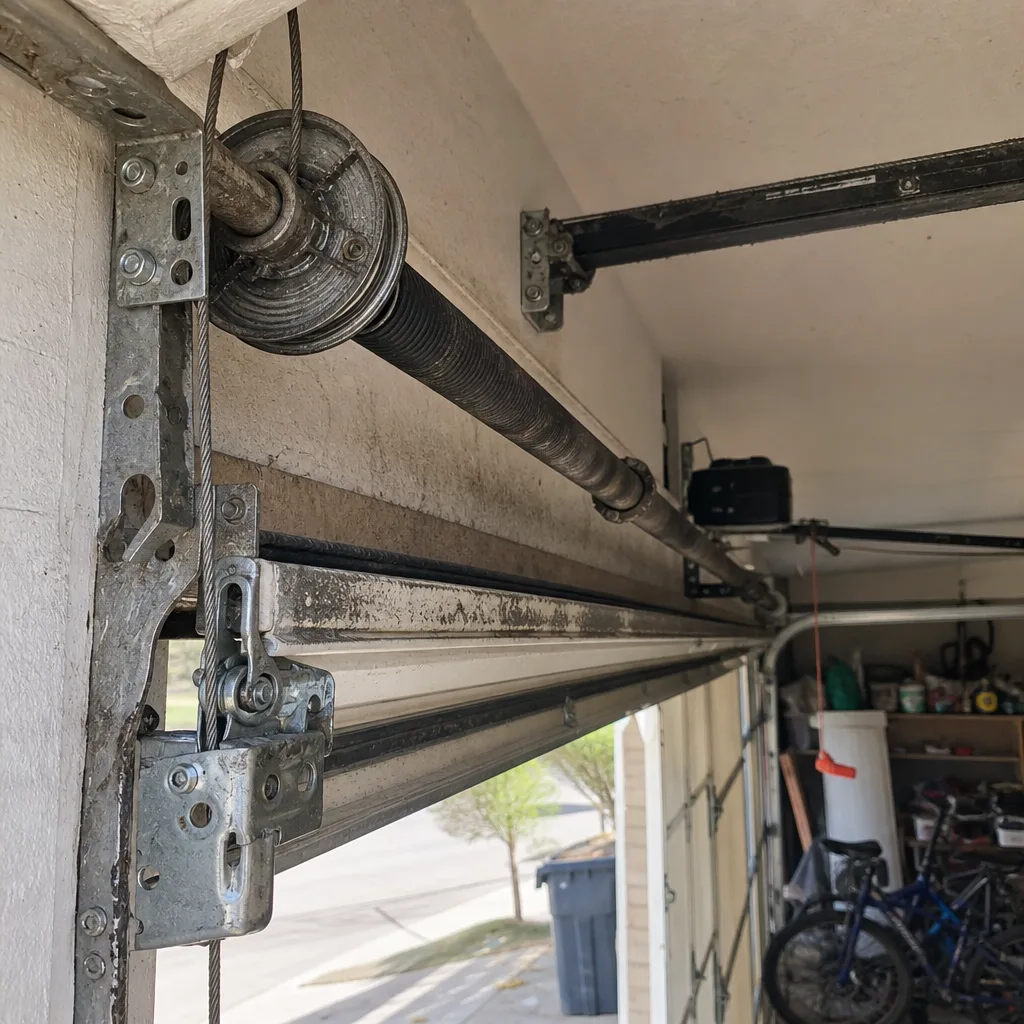 Before
 After
AfterThe Complete Guide to Garage Door in Flower Mound
Here’s a number most Flower Mound homeowners never hear: the average spec-grade garage door installed by a tract-home builder between 2005 and 2015 is rated for about 10,000 open-and-close cycles. Do the math on a two-car household. Two cars leaving for work, two returning, maybe a kid with a bike or a trip to the grocery. That’s four to six cycles a day, easy. Most families blow past 10,000 cycles in under nine years. If your home in Flower Mound was built during that stretch and you’re still running the original door, you’re not maintaining a garage door. You’re waiting for a spring to let go. This guide walks through every decision a Flower Mound homeowner faces, from clay-soil track problems to HOA rules that limit your replacement choices, so you know exactly what to check, what to fix, and what to leave alone.
Quick Answer
Garage door issues in Flower Mound TX fall into three buckets: spring failure from our heat and cycle counts, track misalignment from expansive clay soil shifting the foundation, and hardware fatigue from builder-grade parts that were never meant to last this long. Most repairs cost between $150 and $450, a new door runs $900 to $2,800 installed depending on material and insulation, and the decision to repair or replace comes down to door age, spring condition, and whether the panels are still true. When in doubt, a Otto’s Garage Door home inspection beats guessing.
Table of Contents
- Why Flower Mound Clay Soil Wrecks Garage Door Tracks
- The 100°F Attic: How North Texas Heat Kills Springs Early
- HOA Rules in Wellington, The Cascades, and Canyon Falls
- Builder-Grade vs. Residential-Duty Hardware: What Actually Gets Swapped
- The Repair vs. Replace Decision Tree
- What Garage Door Work Actually Costs in Flower Mound
- How to Think About Garage Door Brands in Flower Mound
- Common Mistakes to Avoid
- When to Call a Professional
- Frequently Asked Questions
- The Bottom Line
Why Flower Mound Clay Soil Wrecks Garage Door Tracks
Flower Mound sits on the Eagle Ford Shale formation, which means the soil under most homes is expansive clay. When it rains, that clay swells. When the summer heat bakes it dry for six weeks straight, it shrinks. The slab under your garage doesn’t move much, but it moves enough. A quarter-inch of differential settlement is plenty to throw a 16-foot door track out of plumb, and once the tracks aren’t square, the rollers start fighting the rails on every cycle. The door gets louder. The opener motor works harder. And the panels begin racking, which is the word we use when the door twists slightly on its way up and starts binding on one side.
Here’s the warning sequence we see in Flower Mound garages, and it’s dependable enough that we can almost set a clock to it:
- Scraping or grinding at one end of the door - a roller is no longer seated properly in the track because the track has shifted.
- Slight gap at the bottom corner when closed - the door isn’t meeting the floor evenly anymore, which means the slab or the track has moved.
- Visible bowing or hairline crack in a panel - the panel is now load-bearing in a way it wasn’t designed for, and it’s about to give.
- Opener strain, error codes, or reversing at the halfway point - the motor is fighting the misalignment and losing.
The fix isn’t complicated if you catch it early. We re-hang and re-shim the tracks, re-plumb the vertical rails, and in some cases add reinforcement struts to panels that have started to bow. What you don’t want to do is ignore the scraping noise for a year, because by then the panel has usually cracked and you’re replacing the door instead of adjusting the track. If you’re in an older section of Flower Mound, near the original 1970s and 80s builds off Morriss Road or down near the lake, your slab has had decades to settle and the tracks have likely been adjusted at least once already.
Quick check you can do yourself: stand inside the garage with the door closed and look at the gap between the bottom of the door and the floor. If it’s tight on one side and a half-inch on the other, your tracks are out of level. That’s a Garage Door Repair in Flower Mound call worth making before a panel cracks.
The 100°F Attic: How North Texas Heat Kills Springs Early
Garage door torsion springs are rated for a specific number of cycles, and that rating assumes something the manufacturer doesn’t say out loud: a normal operating temperature. Flower Mound doesn’t do normal. From June through September, the air inside an attached garage that faces west routinely hits 110 to 120 degrees, and the space above the ceiling gets hotter still. Heat accelerates metal fatigue. A spring rated for 10,000 cycles at 80 degrees might effectively give you 6,000 or 7,000 cycles here. That’s not a warranty complaint. That’s metallurgy.
Here’s what that means in plain terms. If your springs were installed in 2017 and your household runs the door four times a day, you’ve already passed 8,000 cycles on paper. Add the heat penalty, and you’re effectively at end of life even though the spring hasn’t snapped yet. A door is 200 pounds riding on two springs. Respect it.
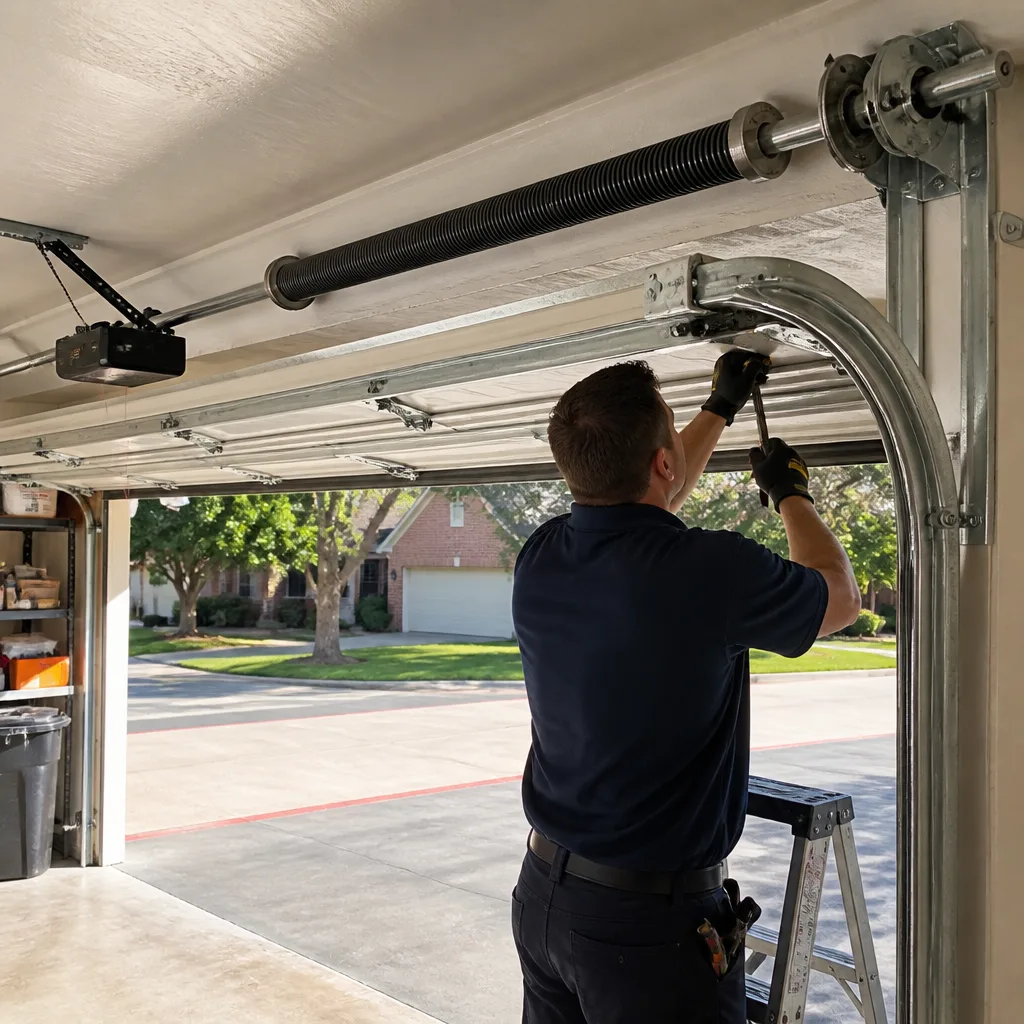
We count spring cycles the way you count tire miles, and we’ll tell you honestly what’s left on yours. Most extensions and torsion springs on Flower Mound doors are due for replacement between years 7 and 9, not the 10 to 12 the box-store charts suggest. It’s one reason we recommend a visual spring inspection every year when the weather turns hot. You’re not just checking for rust. You’re checking the gap between coils, which widens and becomes uneven as the spring fatigues. If the coils don’t look uniform, the spring is talking to you.
HOA Rules in Wellington, The Cascades, and Canyon Falls
If you live in a deed-restricted Flower Mound subdivision, you already know the HOA reviews exterior changes. Where garage doors get tricky is that the standards aren’t uniform across town, and the ARC (Architectural Review Committee) in one neighborhood may approve what the committee two miles away rejects. Here’s what we’ve learned from doing replacements in the three most commonly restricted neighborhoods:
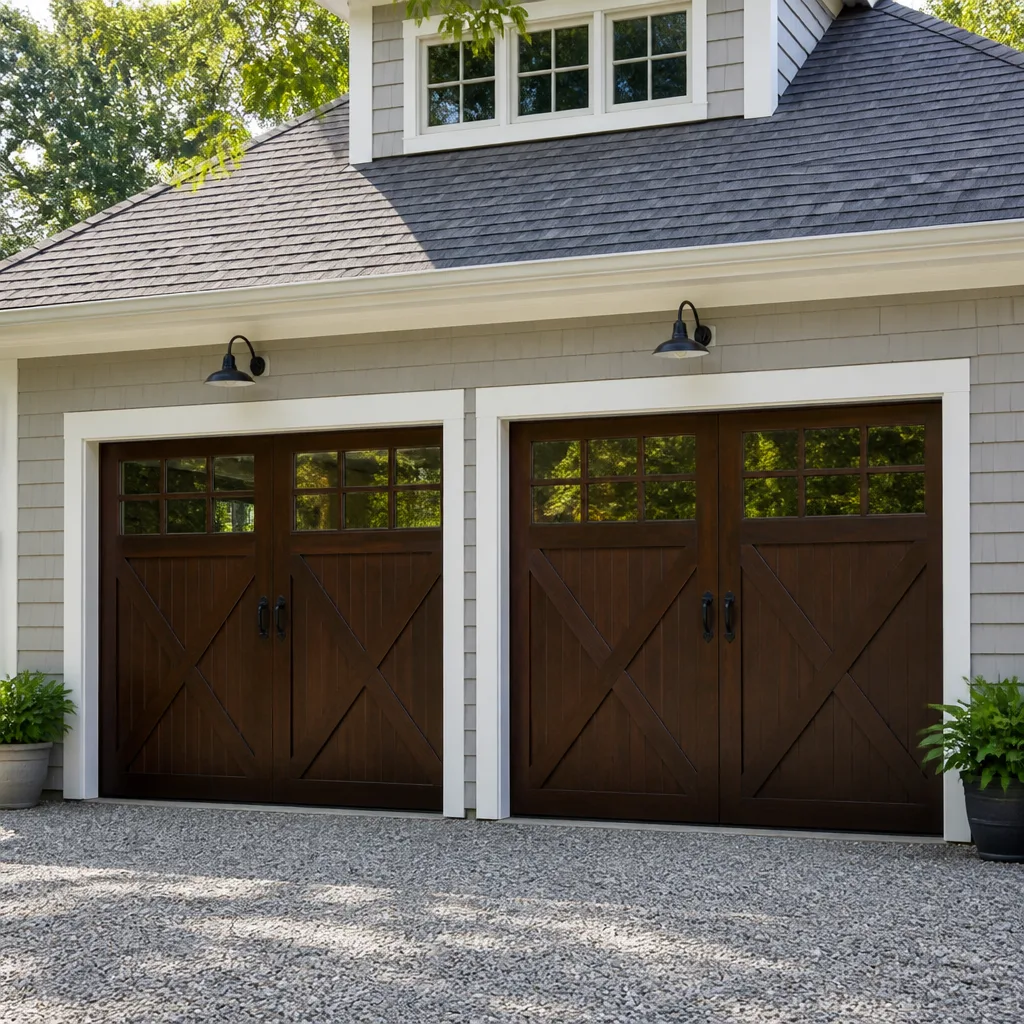
- Wellington: Original sections lean heavily toward carriage-house styling in specific paint-grade or stain-grade finishes. The HOA there generally wants doors that match the original architectural intent, which usually means wood-look or coachman-style doors with decorative hardware. You won’t typically get away with a plain raised-panel steel door if your street has the carriage style.
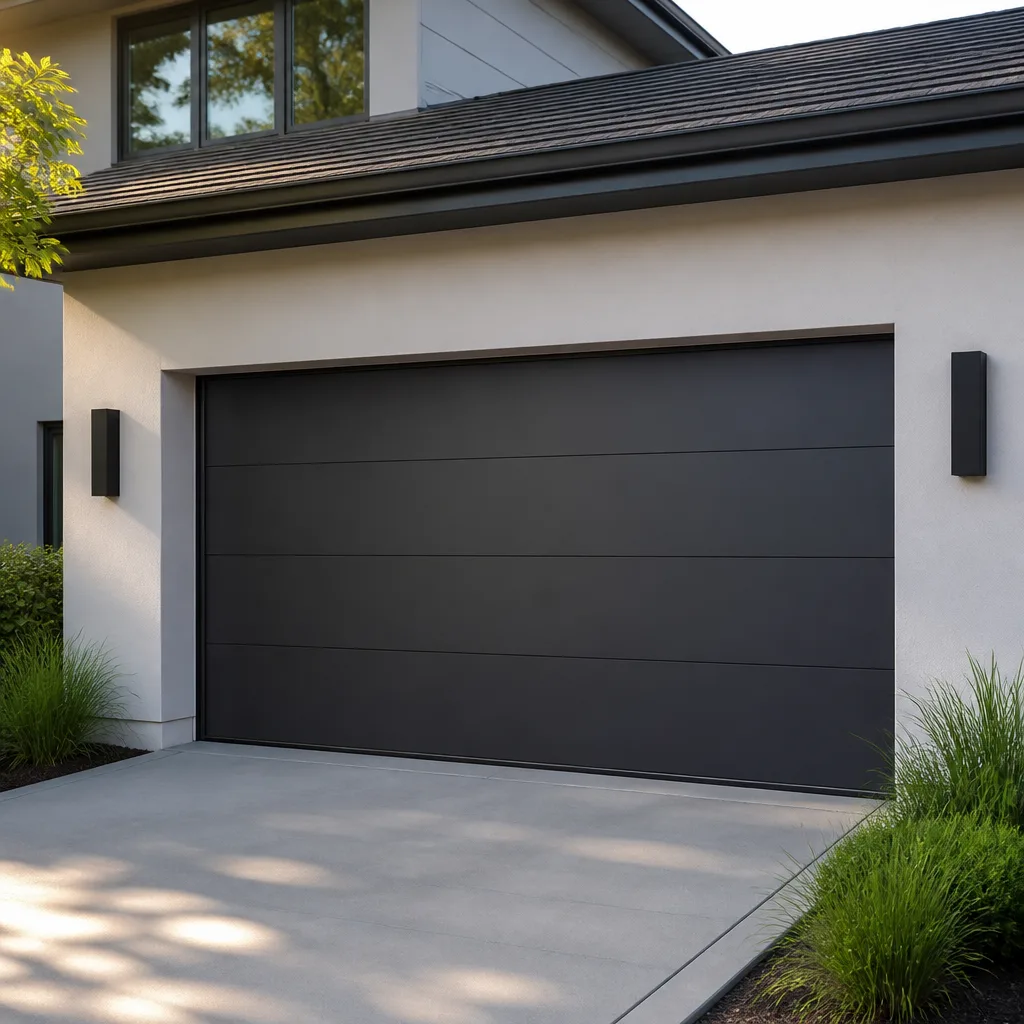
- The Cascades: This neighborhood has a more contemporary mix, but the ARC is particular about color cohesion across the front elevation. If your door faces the street, expect the committee to ask for a color swatch or a photo mock-up before approving the replacement. Dark bronze and black are common approvals; loud colors are not.
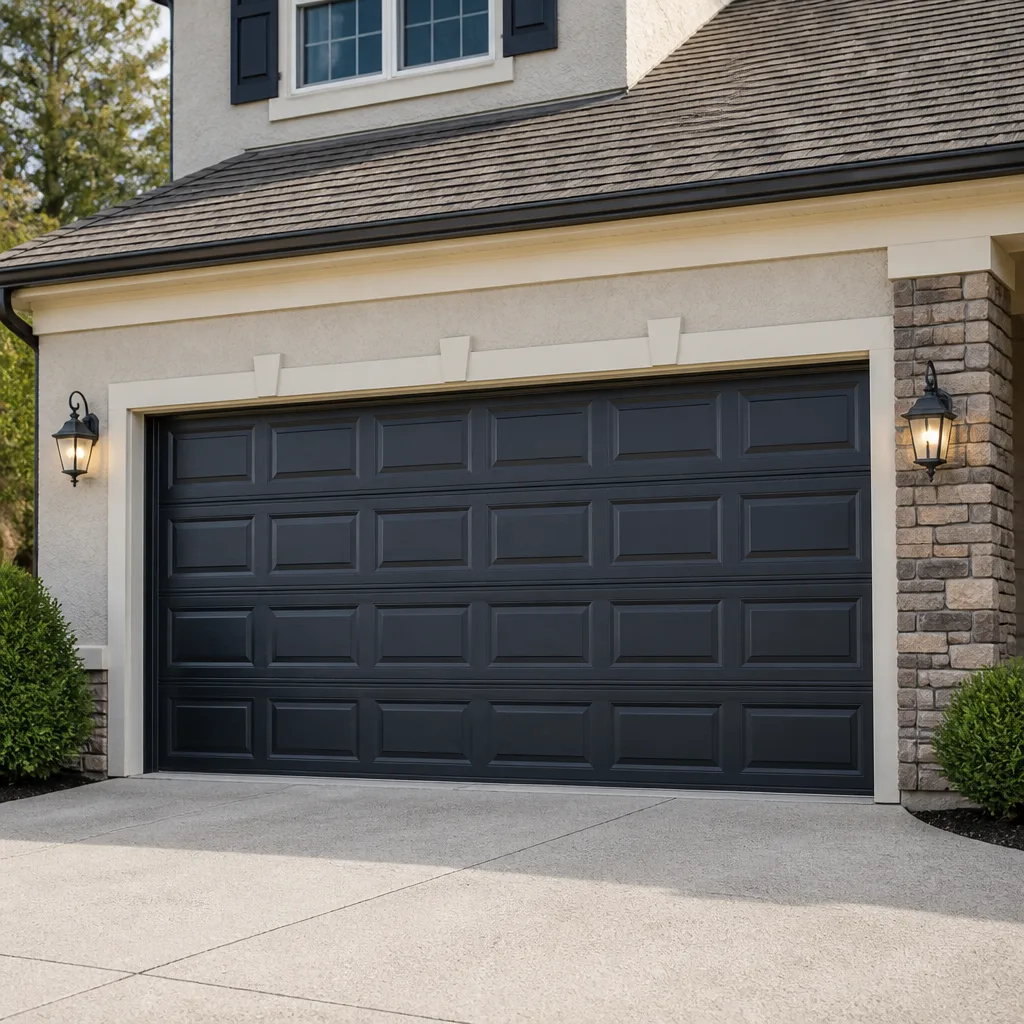
- Canyon Falls: As one of the newer master-planned communities in the Flower Mound area, Canyon Falls tends to have the most prescriptive guidelines, including specific material and window-panel standards in some sections. We’ve replaced doors there where every single door on the street had to match the same approved style family.
Before you order a replacement door, pull your subdivision’s design guidelines and send them to whoever’s quoting the work. A shop that works in Flower Mound regularly has likely already navigated your specific HOA, but don’t assume. The homeowner signs the ARC application, and if the door goes in and the committee rejects it, you’re the one who has to fix it. We’ve helped homeowners unfuck that exact situation, and it’s cheaper to get it right the first time.
Builder-Grade vs. Residential-Duty Hardware: What Actually Gets Swapped
Builders don’t install bad garage doors. They install spec doors, which is a different thing. A spec door has to hold up long enough to clear the one-year warranty and look decent in the sales listing. That’s the entire design brief. The door itself is usually a non-insulated or minimally insulated steel pan door, and the hardware is whatever the subcontractor could source for the lowest per-unit cost on a five-house week.
Here’s what actually differs between what the builder put in and what we install on a Garage Door Installation in Flower Mound when a homeowner upgrades:
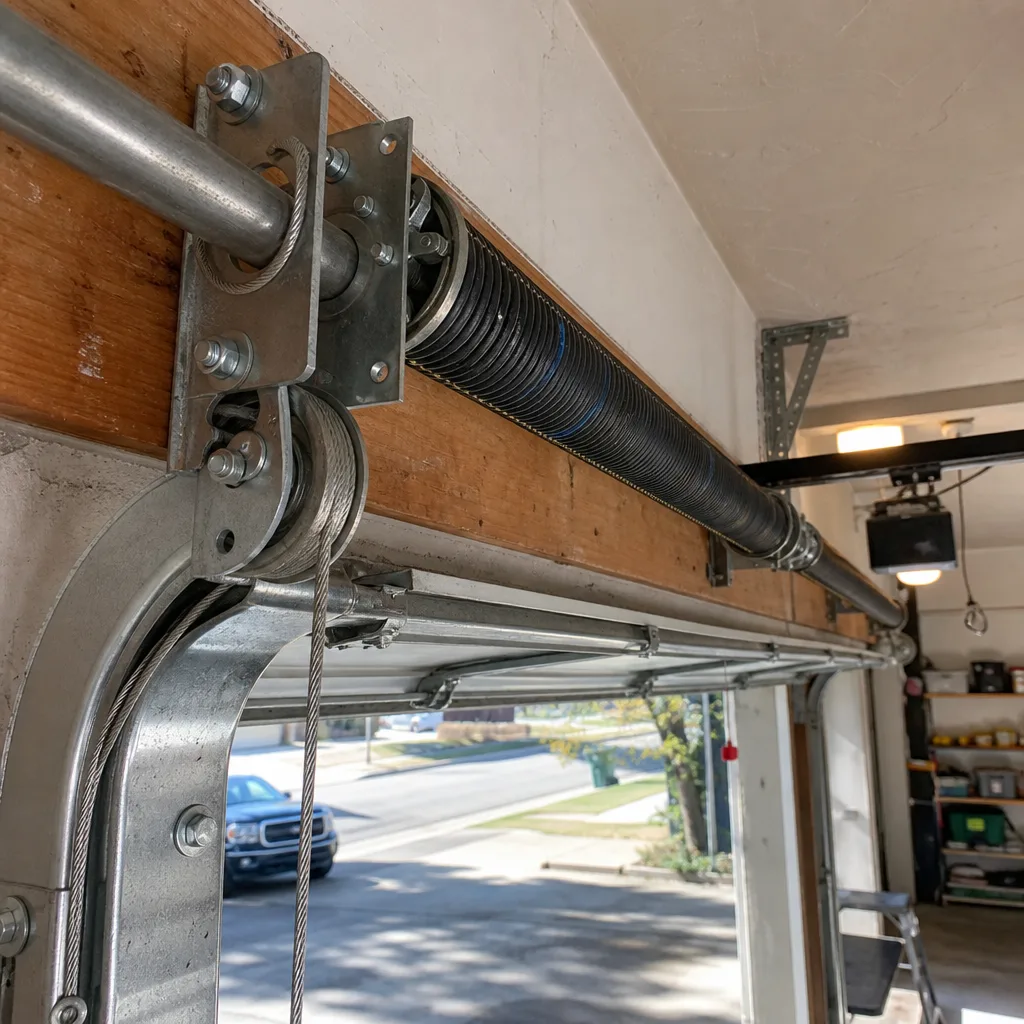
- Springs: Builder doors get 10,000-cycle springs. We install 20,000 to 30,000-cycle residential-duty springs as standard. They cost a little more and last two to three times longer.
- Rollers: Spec rollers are steel rollers with no bearings, or cheap plastic. They grind, they chatter, and they chew up the track. We swap in sealed-bearing nylon rollers on nearly every new install we do. Quieter, smoother, and they don’t tear up the rails.
- Hinges and brackets: Builder hinges are stamped steel with a thin gauge. Under a door that’s racking even slightly, they bend. Residential-duty hinges are a heavier gauge and hold the panel true longer.
- Track: Most spec tracks are fine, but on doors that will run for another decade we sometimes upsize to a heavier track gauge if the new door is insulated and heavier than the original.
- Weather seal: The bottom seal on a builder door is often shot within five years, especially here where the south-facing side of a Flower Mound garage bakes in direct sun from noon to eight. A good vinyl T-style seal keeps the dust out and the A/C in.
None of this is exotic. It’s the difference between parts picked for a price point and parts picked to actually last in a climate that punishes shortcuts.
The Repair vs. Replace Decision Tree
The honest answer to “repair or replace” never starts with cost-though our Garage Door Cost Breakdown: The Flower Mound Homeowner’s Reference for 2026 can help you plan. It starts with three questions, in this order:
- How old is the door? Under 10 years: repair is almost always the right call, unless the panel damage is already extensive. Over 15 years: replacement becomes the smarter money, because you’re going to be feeding this door parts every year. Between 10 and 15: that’s the judgment zone, and it depends on questions two and three.
- What type of springs does it have, and how old are they? If you’re on the original extension springs (the ones that stretch along the horizontal tracks), the door is outdated by safety standard anyway. Modern torsion springs are safer and last longer. If we’re replacing springs anyway and the door is 12 years old, you’re halfway to a new door’s cost and you’ll still have old panels.
- Are the panels straight? This is the deciding factor in Flower Mound specifically. Our clay soil racks doors, and a racked door bows and eventually cracks its panels. Once a panel is cracked, two things are true: the door is no longer weather-sealed, and the structural integrity is compromised. You can patch a steel panel short-term. You can’t un-crack an insulated composite panel. If more than one panel shows racking stress, replace the door.
One more Flower Mound-specific note: if your door faces south or west with no shade, and it’s a thin steel pan door, you’re paying a real energy penalty. An insulated door with an R-value of 12 to 18 keeps the garage noticeably cooler in August, and if there’s a bedroom above the garage, that’s not a luxury. That’s the difference between a room that cools and a room that doesn’t.
What Garage Door Work Actually Costs in Flower Mound
Here’s the pricing we quote in Flower Mound, and it holds from the phone call to the driveway. That’s the whole point: the price quoted before the work starts is the price you pay. No dispatch fee games, no “we found additional issues” upcharge. If we find something else while we’re working, we stop and tell you before we touch it, and you decide.
- Spring replacement (torsion, pair): $180 - $340, depending on spring size and cycle rating. We quote the cycle-count upgrade at the same visit. This is the most common repair we do in Flower Mound, by a wide margin.
- Cable replacement: $110 - $180. Often done alongside the springs, because when a spring snaps, the cable usually takes damage too.
- Track re-alignment or re-shimming: $125 - $250. This is the clay-soil fix, and it’s wildly underdiagnosed by shops that don’t know Flower Mound dirt.
- Roller replacement (set of 10): $85 - $150 for sealed-bearing nylon.
- Opener motor replacement: $280 - $550 installed, including basic remotes. Higher for smart openers with battery backup.
- New door installation (single, 8×7 or 9×7): $900 - $1,800, materials and labor. The spread is insulation level, material, and window inserts.
- New door installation (double, 16×7 or 18×7): $1,400 - $2,800. A fully insulated steel door with windows on a double opening in Flower Mound typically lands around $2,000 to $2,400.
Every price is quoted and agreed before any work starts, in writing. Our active offers right now: $40 off any repair over $200, a free second opinion on any written estimate, no trip charge inside Denton County, and a permanent 10% discount for seniors and veterans. That last one isn’t a promo. It’s been running since we opened in 2004, and it isn’t stopping.
How to Think About Garage Door Brands in Flower Mound
Homeowners love to ask which brand is best, and we’ll give you the straight version. The brand matters less than the line within the brand. A Chamberlain from the contractor aisle is a different machine than a Chamberlain professional line opener with a solid rail. A Craftsman door from 2008 was a rebranded unit made to a price; today’s Craftsmans are a different animal. What actually matters is that the opener is sized correctly for the door weight, the springs are matched to the door, and the install is square.
That said, if you’re replacing an opener in Flower Mound, we install and service LiftMaster and Chamberlain as our core opener lines, with Raynor and Craftsman doors regularly in the mix depending on the look the homeowner wants and what the HOA will approve. We’re trained and certified across all of the brands we work on, and we carry parts on the truck for the opener failures we see most often: gear kits, logic boards, and drive belts. If the opener is straining, the problem is almost never the opener. It’s the door. But if you do need a new opener, we’ll tell you what fits your door and what doesn’t, and we won’t upsell you a smart-home hub you don’t need.
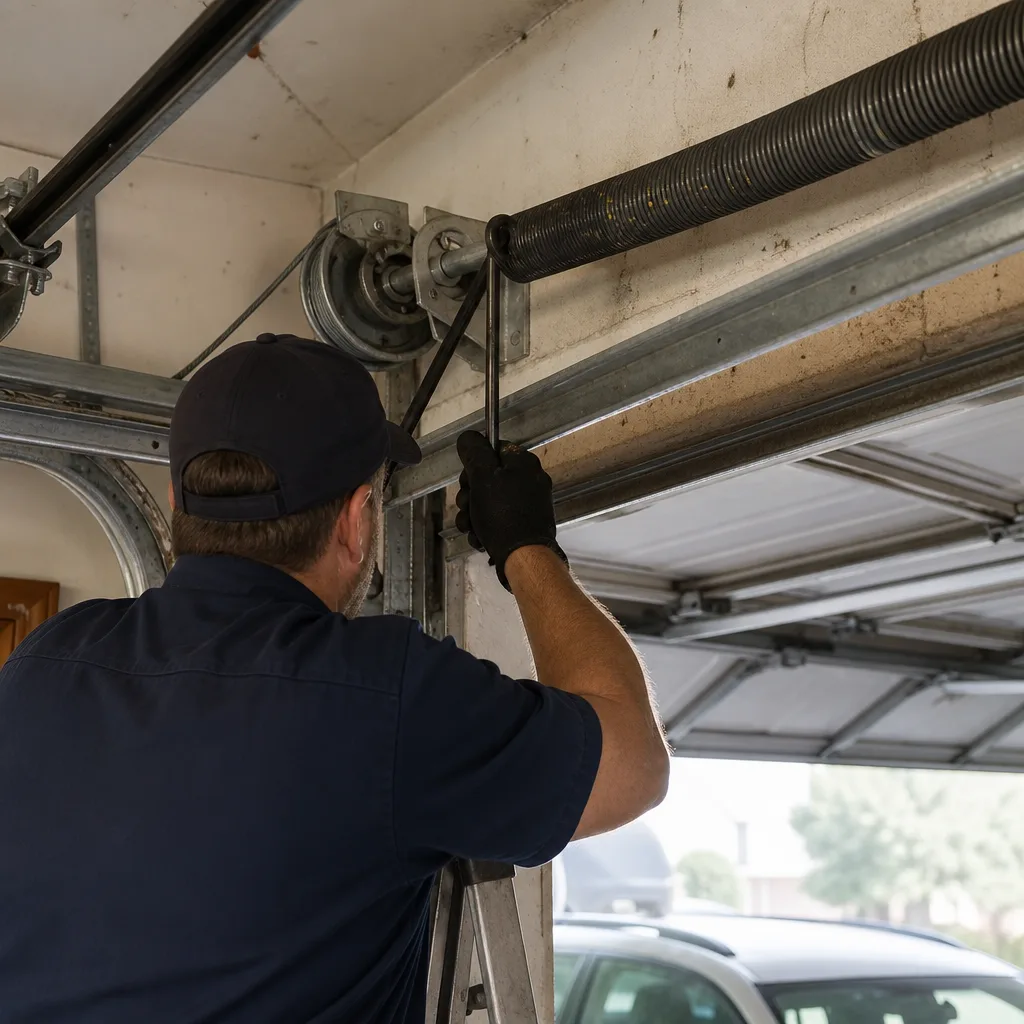
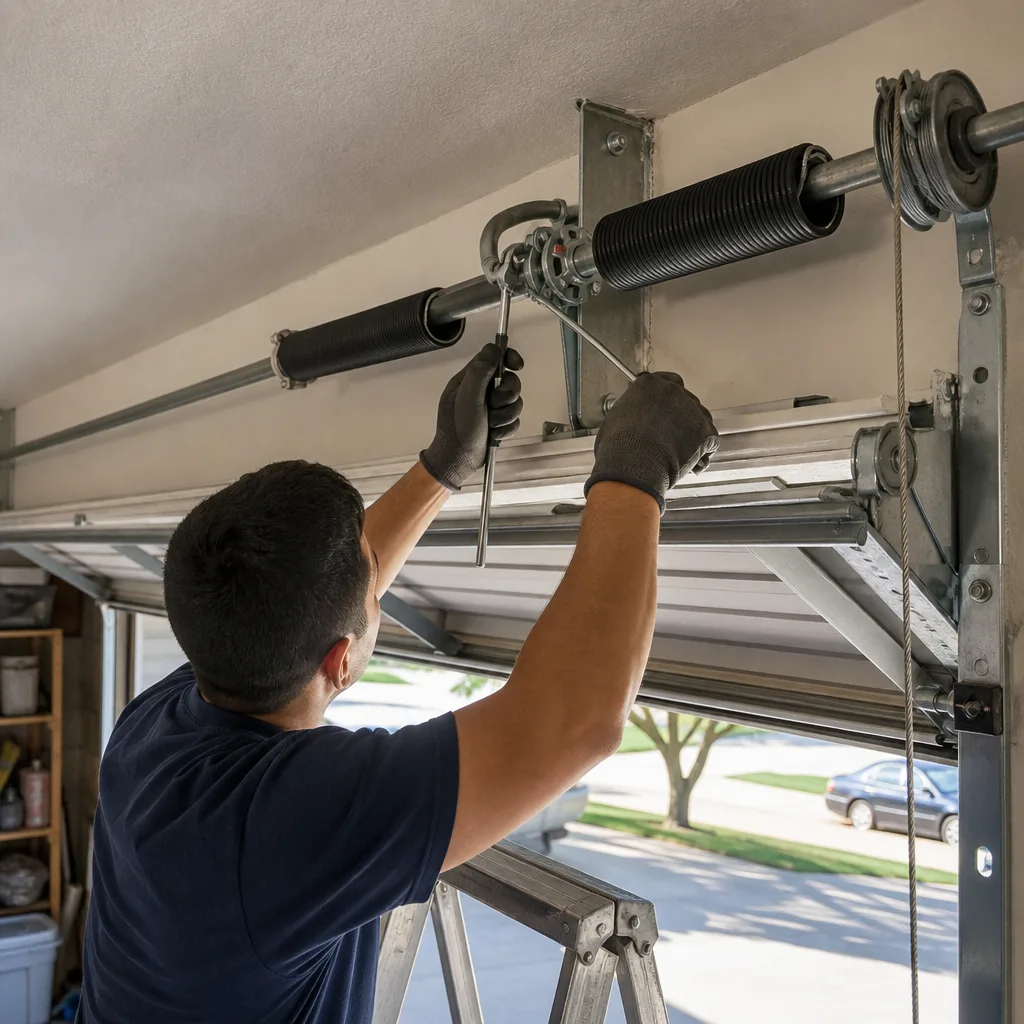
One thing worth stating plainly: a Garage Door Opener in Flower Mound replacement is not a DIY Saturday job if the opener is torsion-spring driven. The spring holds the weight, not the opener. You’ll see YouTube videos of people rewinding torsion springs with screwdrivers. Don’t. A torsion spring under full tension carries enough force to take off a finger or open a face. This is the one job where even I’ll tell you: call a licensed pro and watch from the driveway.
Common Mistakes to Avoid
- Lubricating the wrong parts. Homeowners spray WD-40 on everything, which is wrong. WD-40 is a solvent, not a garage door lubricant. Use a white lithium or silicone spray on the rollers’ bearings, hinges, and the torsion spring. Never lubricate the track itself; it makes the rollers slip and the door run rough.
- Replacing one spring instead of both. Torsion springs are installed in matched pairs. When one breaks, the other is right behind it. Replacing only one means you’ll be back in the driveway in three months, paying another service fee. We replace both, always, and we tell you why before we do it.
- Ignoring a slow opener for months. An opener that’s gotten slower or noisier is telling you the door is binding. In Flower Mound, that usually means the clay soil has shifted your track. Wait long enough and the opener motor burns out doing a job it was never sized for.
- Painting over rust without treating the panel. Flower Mound’s humidity spikes in spring and fall mean surface rust on steel doors. Painting over it without sanding and priming just traps the moisture. You’ll see the rust bubble through in eighteen months.
- Buying the cheapest opener on the shelf. A $120 big-box opener with a chain drive will be loud enough to wake the house and it’ll wear out in five years on a door that sees four cycles a day. A belt-drive opener with a DC motor is quieter and lasts longer in daily use, which is what Flower Mound families actually run.
- Signing an HOA application without checking the material spec. You’d be surprised how many ARC rejections in Wellington and Canyon Falls come down to a homeowner choosing an insulated steel door when the neighborhood requires a wood-look or carriage style. Check the guidelines before the door goes in, not after.
When to Call a Professional
You can replace the weather seal on your own. You can tighten a hinge screw. You can lubricate the rollers. But when the torsion springs go, or a cable snaps and the door is hanging off-level, or the door jumped the track and is wedged half-open with your car inside, that’s not a YouTube project. A door is 200 pounds riding on two springs, and when one lets go, the energy has to go somewhere. We answer the phone 24/7. Not a call center. A live person, often Otto himself, who’ll quote the job on the phone and hold that price at the driveway. Garage Door Repair in Flower Mound is what we do, and we’ve done it since 2004. Call (817) 631-5388 for a free estimate.
Frequently Asked Questions
Torsion spring replacement in Flower Mound typically runs $180 to $340 for both springs, including labor and a cycle-rated spring upgrade if you want the longer-life option. We quote the exact price on the phone before we come out, and it doesn’t change at the door. Call (817) 631-5388 and you’ll get the number up front.
Yes. For emergencies like a snapped spring or a door stuck halfway with a vehicle inside, we run same-day and 24/7 service across Flower Mound. The phone line is answered by a real person any hour, and Otto quotes the job on that call and holds the number when he shows up.
No. The price quoted on the phone is the price you pay, in writing, before any work starts. If we find something additional while we’re inside the garage, we stop, explain it, and get your okay before we touch it. That’s the 90-Day Done Right Promise in practice, and it’s printed on every invoice.
Yes. We stock torsion springs in the common sizes, cables, rollers, hinges, and opener gear kits on the truck, so most repairs are completed in a single visit. The goal is always to get your door running the same day it broke. Call (817) 631-5388 and we’ll tell you what’s in the truck for your specific door.
A scraping noise on one side almost always means the track has shifted out of plumb, and in Flower Mound the usual cause is expansive clay soil under the slab doing its seasonal swell-shrink cycle. The track needs to be re-leveled and re-shimmed before the misalignment starts bowing the panels. It’s a $125 to $250 fix if caught early, and a $1,500 door replacement if not.
Yes. We give free estimates on new doors and free second opinions on any written estimate you’ve gotten from another company, no trip charge inside Denton County. We’ll look at the door, tell you the honest condition, and give you a written quote you can take to your HOA if you need to. Call (817) 631-5388 to set it up.
The Bottom Line
A garage door in Flower Mound lives a harder life than most people realize. The clay soil shifts the tracks. The attic heat burns through spring cycles faster than the manufacturer’s rating. The builder-grade hardware from the tract-home era wasn’t meant to see year nine, let alone year fifteen. If you’re on the original door from a 2005-to-2015 build, you’re running on borrowed time, and the smartest thing you can do is get an honest inspection before something fails catastrophically with a car stuck inside. Know what you have, know what’s wearing, and make the repair-or-replace call with real information, not a sales pitch. That’s the whole job, and it’s been the job since 2004.
Written by Otto Reinhardt, Owner at Otto’s Garage Door, serving Flower Mound since 2004.