
Last updated September 10, 2026
Full 25-point door and opener safety check with every visit - springs, cables, rollers, tracks, and your LiftMaster or Chamberlain opener included
You get a price before we start. It does not change when the truck arrives.

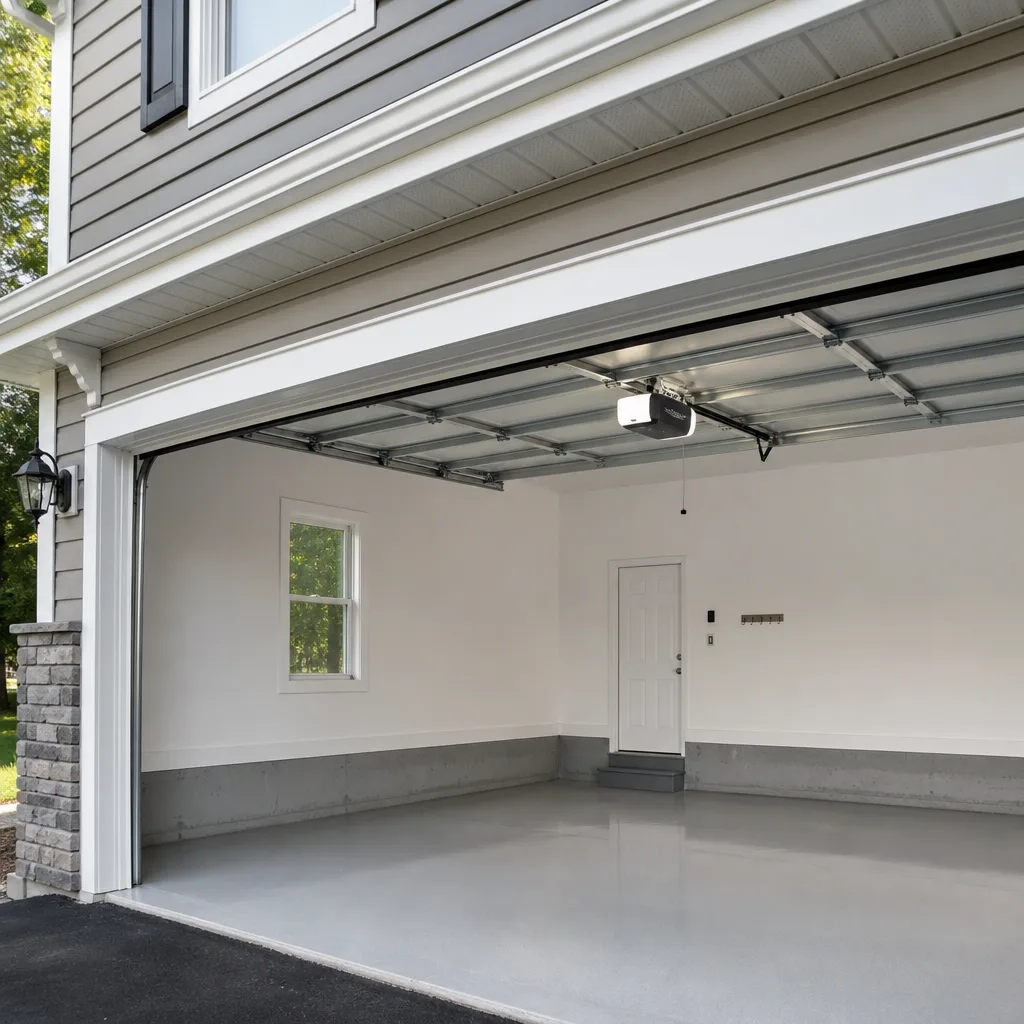
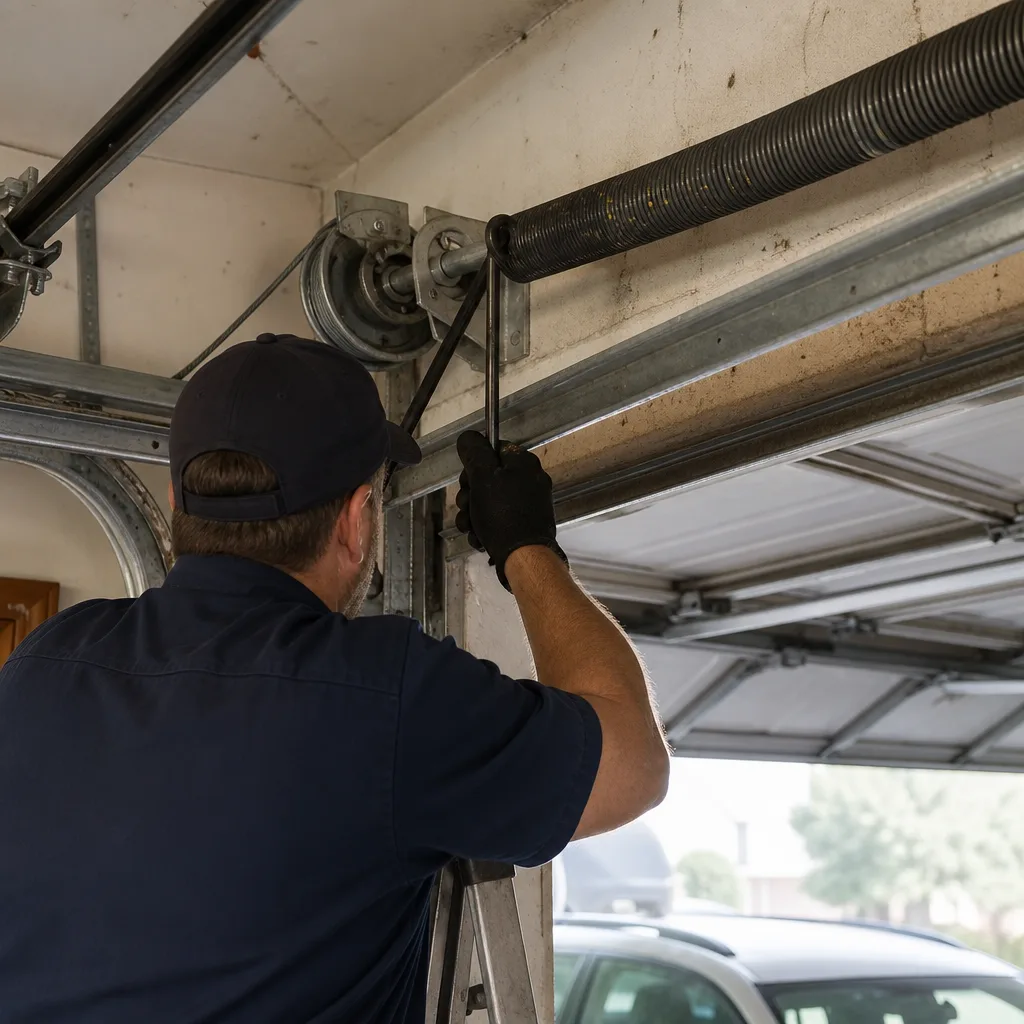 Before
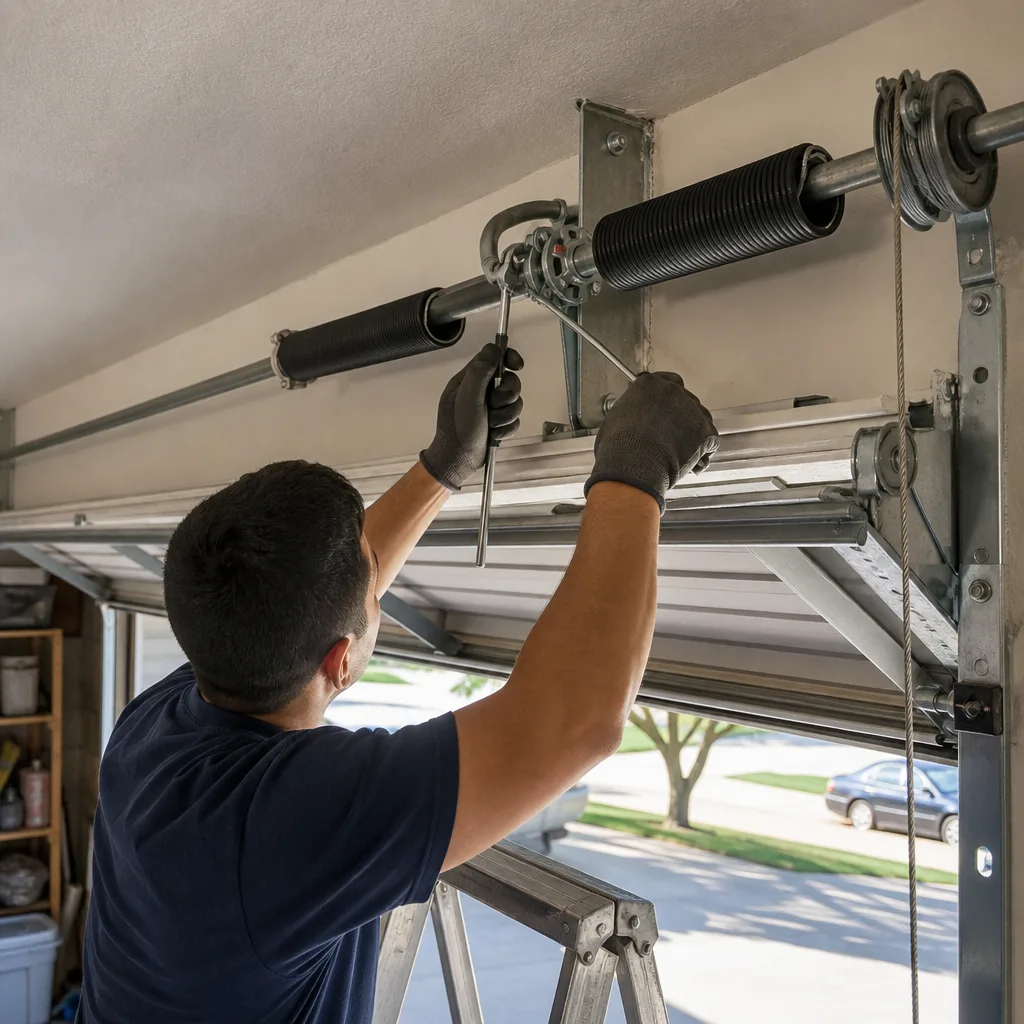 After
After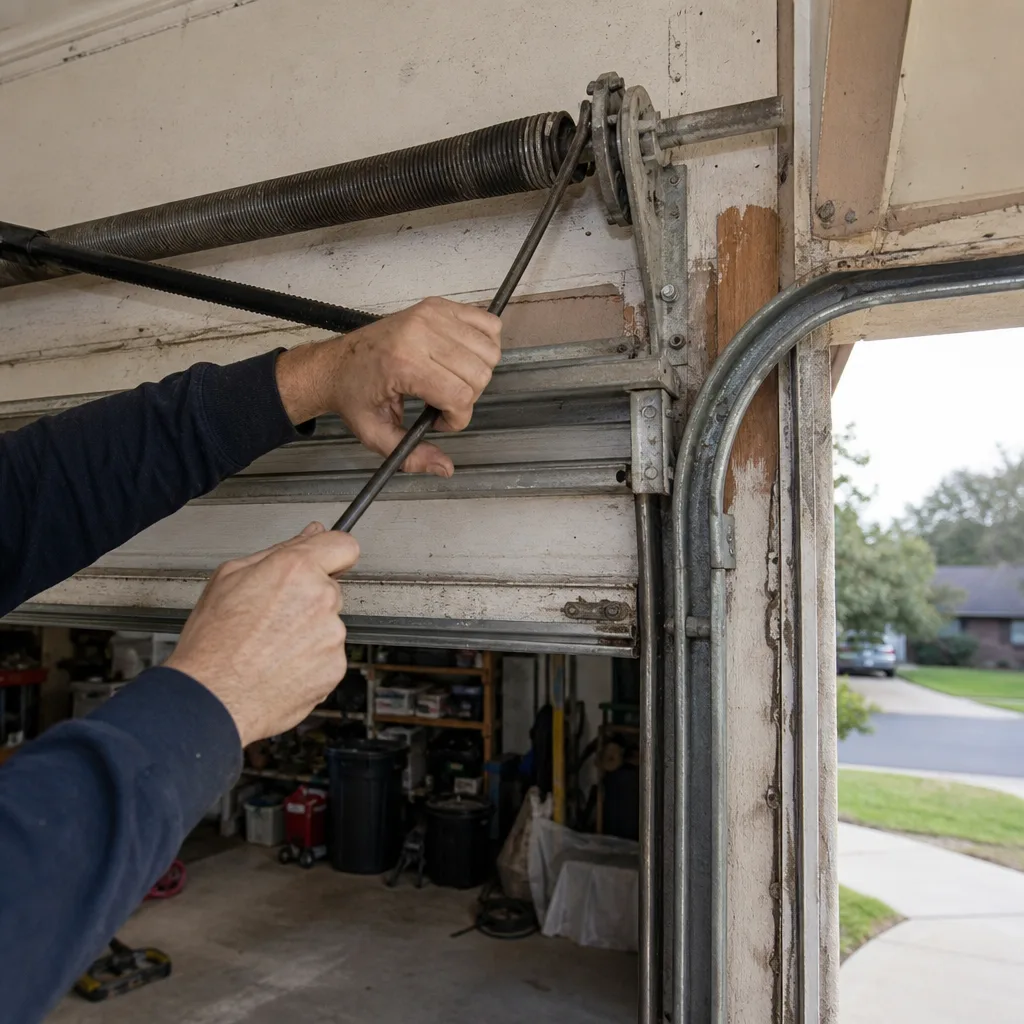 Before
 After
After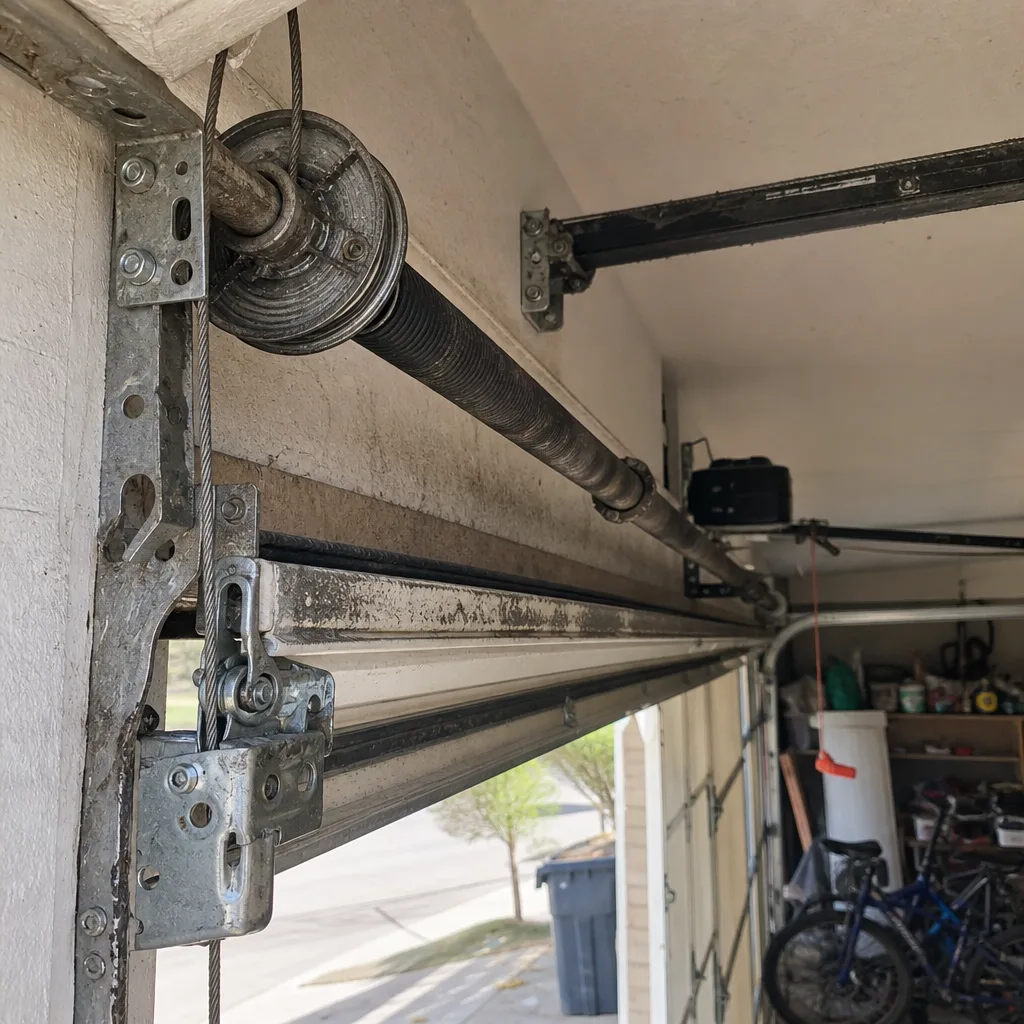 Before
 After
AfterGarage Door Repair Maintenance Checklist for Flower Mound Homeowners
Here’s the thing nobody tells you about garage doors in Flower Mound: they don’t fail randomly. They fail on schedule. The August opener burnout, the November spring snap that sounds like a gunshot, the February roller that seizes and bends the track. All of it is seasonal, all of it is predictable, and almost all of it is preventable with about forty minutes of attention twice a year. This checklist is built around what actually breaks in North Texas, not what breaks in a generic suburb. Flower Mound sits on clay soil that shifts with every wet-dry cycle, gets hammered with 100-degree stretches from June through September, and has sprinkler systems running hard against garage doors in half the subdivisions in town. If your door is more than eight years old, start here.
We’ve kept the same base of operations in Flower Mound since 2004, and the calls come in patterns. That’s why this guide exists. Not to sell you a service call. To make sure you don’t need one at 6:45 on a Tuesday morning when your car is parked behind a door that won’t lift.
Quick Answer
Run this garage door maintenance checklist twice a year in Flower Mound (March and September) and you’ll catch most failures before they strand your car. The four things that actually kill doors in this climate are heat-stressed torsion springs, grit-packed rollers, sprinkler-soaked bottom panels, and under-lubricated openers running hot in July. Ten minutes of targeted maintenance beats a $350 emergency call.
Table of Contents
- The Lubrication Schedule That Prevents 80% of Service Calls
- Spring Maintenance: The Balance Test and the Hard Stop
- Rollers, Tracks, and the North Texas Dust Problem
- The Bottom Seal: Sprinkler Season Is Harder Than Winter
- Opener Maintenance for a 115°F Garage
- The Month-by-Month Flower Mound Calendar
- Common Mistakes to Avoid
- When to Call a Professional
- Frequently Asked Questions
- The Bottom Line
The Lubrication Schedule That Prevents 80% of Service Calls
If you do exactly one thing from this entire guide, lubricate the door. The number-one service call Otto gets every August isn’t a broken spring. It’s an opener that tripped its thermal overload because the garage hit 115°F and nobody lubricated the chain in three years. Heat plus friction plus a straining motor equals a shutdown at the worst possible moment.
But here’s the part most checklists get wrong: the type of lubricant matters more than the frequency. WD-40 is a solvent, not a lubricant. It strips whatever protection is left and evaporates. On springs, that’s a slow death sentence. You want a lithium-based white grease for metal-on-metal contact, or a dedicated garage door lubricant spray. For the opener chain or screw, a light silicone or white lithium works. Never use WD-40 on springs, hinges, or rollers. We see the aftermath all over Flower Mound.
What to Lubricate Twice a Year
- Torsion springs: Spray the full length of each spring with white lithium grease. The coils should have a visible sheen, not be dripping.
- Hinges: Each hinge pivot point, top and bottom. A door has between 8 and 14 hinges depending on panels.
- Rollers: Only the metal stem that goes into the hinge, not the wheel itself. Nylon rollers do not need lubrication on the wheel.
- Opener chain or screw: Light coat, wipe excess with a rag so it doesn’t collect dust.
- Latch and lock: A small shot into the keyhole and latch mechanism.
What to Skip
- Plastic or nylon parts: Lubricant breaks down some plastics over time.
- The track itself: Rollers ride on the track, not in it. Greased tracks just collect grit.
- Anything electrical: Sensors, motor housing, wall buttons. Dry surfaces, always.
March and September. Before the heat and before the first freeze. That’s the rhythm that works in Flower Mound, where the weather swings harder than the door. If you’re in a subdivision where the houses all went up around the same time, ask your neighbor when their door was installed. Doors age in cohorts around here. When one spring lets go, two more on the street usually follow within a year.
Spring Maintenance: The Balance Test and the Hard Stop
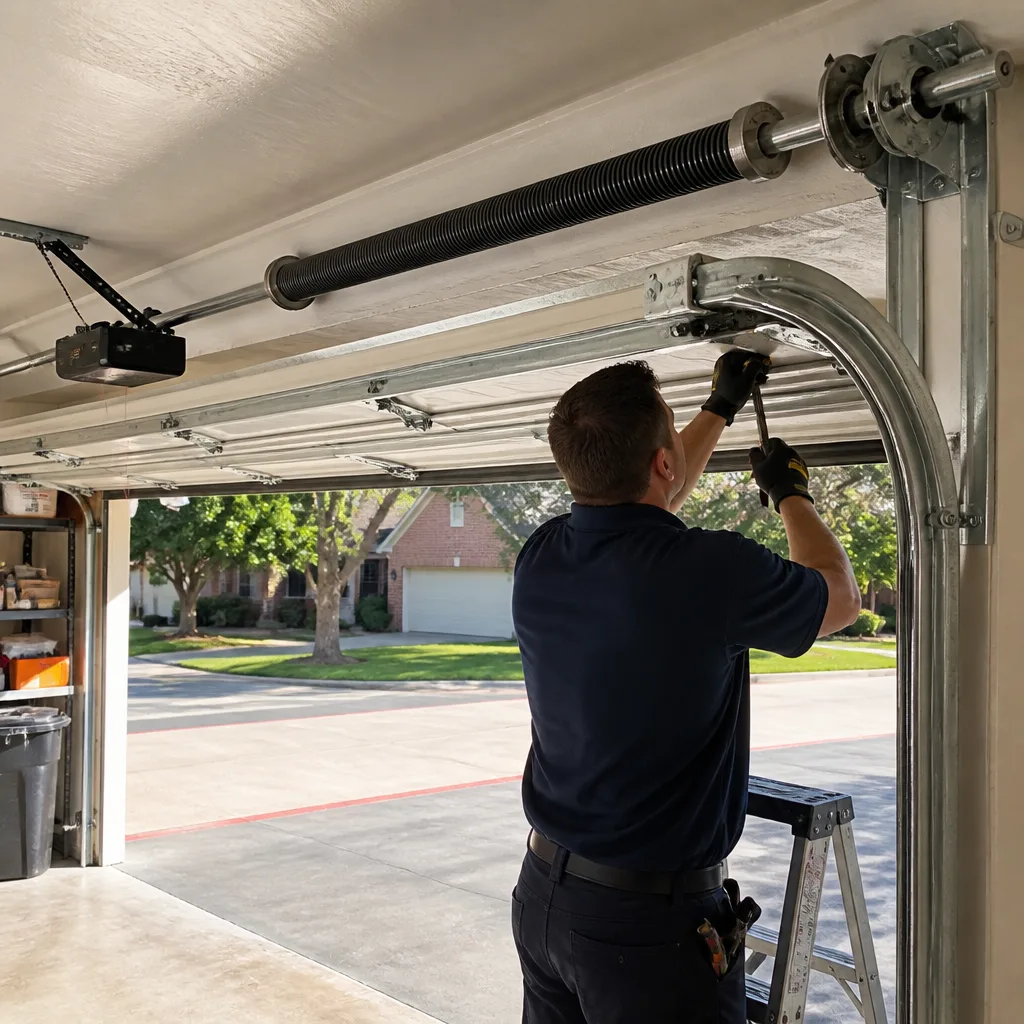
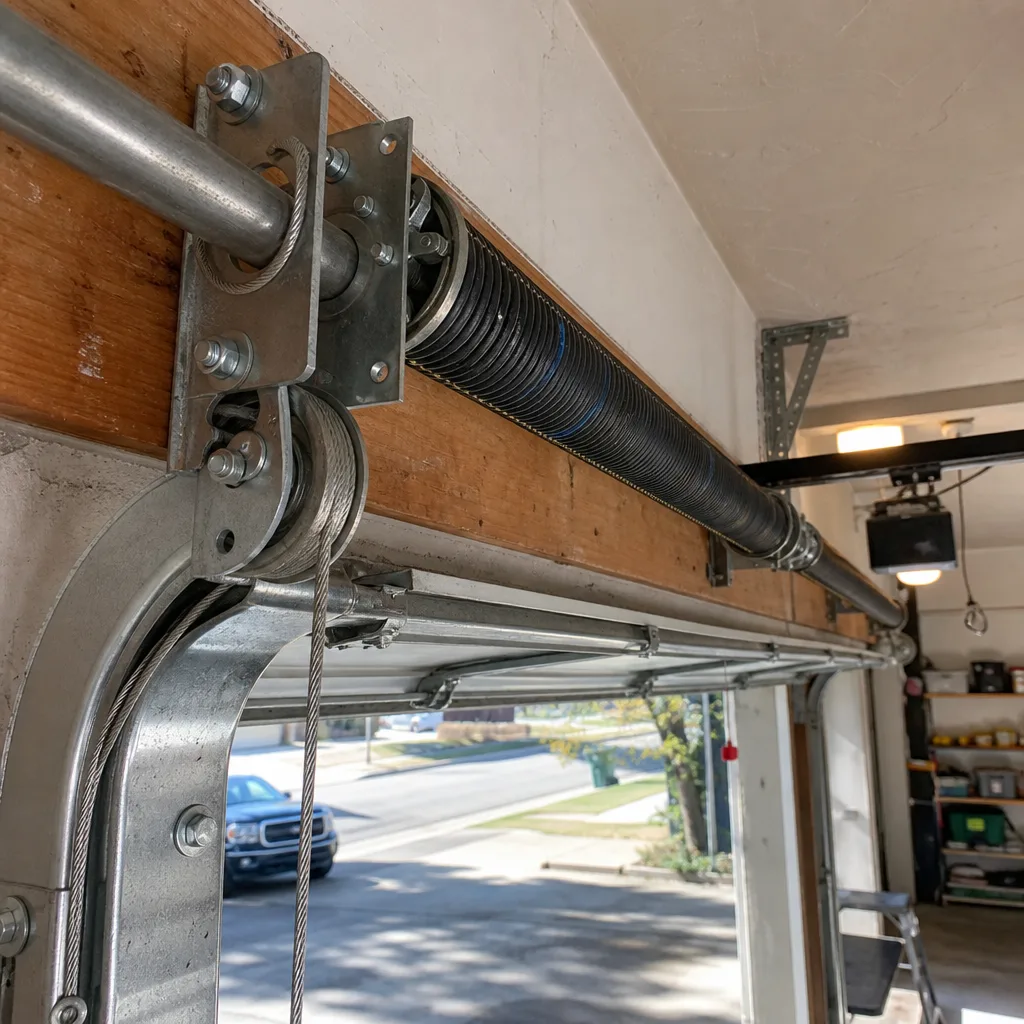
A garage door is two hundred pounds riding on two springs. Respect it. Torsion springs are the single most dangerous component in your house to work on, and the single most common thing that fails on a Flower Mound garage door. Heat accelerates metal fatigue. A spring rated for 10,000 cycles in Ohio might get 7,000 here because of thermal expansion and contraction. If your spring snaps, the door doesn’t just drop. The spring unwinds with enough force to take off fingers, break wrists, or worse.
What most people don’t know: you can evaluate your springs without touching them. The balance test takes thirty seconds and tells you within about 10% where your springs sit in their service life.
The 30-Second Balance Test
- Pull the red emergency release cord with the door fully closed.
- Manually lift the door to waist height.
- Let go completely.
- Watch what happens.
If the door stays put or drifts slowly, your springs are doing their job. If it drops, springs are weak. If it shoots upward, springs are oversized or the door was installed wrong. Both are red flags. A properly balanced door holds anywhere in the travel arc and opens and closes with the same effort. If your door feels like a bag of concrete to lift by hand, the springs are failing and the opener has been compensating for months, quietly burning out its motor.
This is also the moment to be honest about what you’re willing to do. Torsion spring replacement is a hard stop for DIY. The winding rods, the tension, the tooling, the hospital trip when it goes wrong. A door is 200 pounds riding on two springs. We’d rather see you call us than see you at the emergency room. Otto quotes torsion spring work over the phone and holds the price when he pulls into your driveway in Flower Mound. One call to (817) 631-5388 gets the number. That’s how it should work.
For the full rundown on how long springs last in this climate and the replacement options, see our garage door repair page for Flower Mound. We break down spring pricing the way it’s actually quoted, not the way a national call center hopes you’ll accept.
Rollers, Tracks, and the North Texas Dust Problem
Flower Mound is built on Blackland Prairie clay. When it dries, it turns to a fine powder that finds its way into every hinge and track on your property. Combine that with the construction dust from the constant development along FM 2499 and 1171, and your garage door rollers are grinding in a slurry of grit every time they cycle.
Symptoms of grit-packed rollers: a grinding or scratching sound when the door moves, a jerky motion at certain points in the travel, or visible black powder caked around the roller stems. That black powder is worn metal. The roller is eating itself and eventually it will flatten into an oval, jam in the track, and bend the rail.
What to Do Twice a Year
- Inspect each roller. With the door down, look at the wheels on the side track. They should be round, with no flat spots, no cracking on nylon versions, and no wobble.
- Clean the roller stems. Wipe the metal shaft where it enters the hinge with a dry rag. If there’s caked grease, use a degreaser on the rag, not sprayed directly on the door.
- Check track alignment. The track should be parallel on both sides, about the width of your thumb from the door edge. Gaps or bowing mean the door is torquing against the rails.
- Wipe the track interior. A dry rag. No lubricant. You’re removing dust, not adding anything.
Roller replacement is one of those jobs that’s half-DIY-friendly. Nylon rollers with sealed bearings will last fifteen years or more, and they’re noticeably quieter than the metal rollers that most builders in Flower Mound spec’d on the original install. But the bottom two rollers on a standard door are attached to brackets under tension. Those two are best left to someone who does this for a living. The top and middle rollers are generally safe to swap if you’re careful and the door is braced.
One more local factor: soil movement. Flower Mound clay expands in the spring rains and contracts in the summer drought. Over the course of a decade, your garage slab can shift enough to throw the door off plumb. If your door rubs one side of the opening only in summer, the slab is moving. That’s not a roller problem. That’s a framing adjustment.
The Bottom Seal: Sprinkler Season Is Harder Than Winter
People think of the bottom seal as a cold-weather item. In Flower Mound, sprinkler season is the real threat. Overspray hits the base of the door every morning at 5:45 a.m. from April through October. Standing water sits against the bottom panel. The wood or insulated steel wicks it upward. We’ve pulled bottom panels off doors in Flower Mound where the bottom four inches were completely rotted or rusted through, and the homeowner never noticed because the damage was behind the rubber seal.
The test takes ten seconds. With the door closed, look for daylight under the bottom edge. Then feel along the rubber T-seal or bulb seal along the bottom rail. Does it feel spongy or brittle? Is it pulling away from the aluminum retainer? If it is, it needs replacement. Seals are cheap, under $40 at any supplier, and the bottom panel they protect costs several hundred dollars plus labor.
How to Check After Sprinkler Season
- Inspect the seal for cracking. North Texas UV exposure plus chlorine from sprinkler water dries out rubber fast.
- Look for standing water marks. White mineral lines on the seal mean water is pooling there.
- Test the seal compression. Slide a dollar bill under the door and close it. If the bill pulls out easily, the seal is not compressing.
- Check for pest access. A gaped seal is an open invitation to every snake, cricket, and field mouse in Denton County.
Adjusting sprinkler heads is the long-term fix. Half the subdivisions in Flower Mound were built with sprinkler zones tight against the garage. Resealing is maintenance; redirecting a spray head is prevention. Do both.
This is also the point where it’s worth mentioning: if the bottom panel is already damaged, a new seal alone won’t fix it. For doors where rot has compromised the bottom rail, the repair is a new bottom panel or, in many cases, a full door replacement. See our garage door installation guide for Flower Mound for straight numbers on what replacement costs in this market, no sales push.
Opener Maintenance for a 115°F Garage
Your garage in July is an oven. No ventilation, a south-facing door soaking up sun from noon to 7 p.m., and a metal box with a motor inside. Your garage door opener is designed to run at rated capacity in a 120°F environment, but add a straining door and a dry chain, and the thermal overload will trip. That’s the August call we mentioned at the top.
If the opener is straining, the problem is almost never the opener. It’s the door. The springs are tired, the rollers are packed with grit, or the track is binding. The opener is compensating, working three times harder than it should, and the heat is the last straw. Replacing the opener without fixing the underlying door resistance is a band-aid that lasts one summer.
Opener Maintenance Steps
- Test the auto-reverse monthly. Place a 2×4 flat on the floor under the door path. Close the door. It should reverse within two seconds of contact and return to full open.
- Test the photo eyes monthly. Wave your hand across the beam while the door is closing. It should reverse immediately. If the small LED lights on the eyes aren’t solid, they’re out of alignment or dirty.
- Clean the photo eye lenses. Dust from the prairie settles on everything. A dry cloth works fine.
- Check the emergency release cord. It should hang free and pull smoothly. A stiff or frayed cord is a five-minute fix.
- Listen for changes. An opener that sounds different than it did three months ago is telling you something. Grinding, whining, rattling. Track it.
If you’re running a Chamberlain or Genie opener from the early 2010s, it’s approaching the end of its service window. Drive belts last longer than chains, but the internal gears and circuit boards on those units are aging in a hot environment. When it fails, the fix is usually a new opener, not a repair. The opener page covers opener repair and replacement in Flower Mound including what brands Otto’s crew genuinely prefers, and why, after two decades of installing them in this heat.
The Month-by-Month Flower Mound Calendar
Generic checklists say “spring and fall.” That’s a calendar answer, not a Texas answer. Here’s the schedule that actually fits Flower Mound’s weather pattern and the damage it causes.
January & February: The Freeze Watch
- Check the bottom seal for cracks before ice hits. Cold isn’t the primary killer, but a gap lets wind-driven cold air freeze any moisture inside the track.
- Lubricate hinges and springs. Cold makes metal contract, and lubricated parts survive contraction better.
- Listen for spring fatigue. Cold weather is when springs snap most often, usually in the early morning.
March: Full Service
- Run the complete lubrication routine.
- Do the balance test.
- Inspect rollers for flat spots.
- Check the seal after winter rain.
- Test opener auto-reverse and photo eyes.
April & May: Sprinkler Season Begins
- Check sprinkler heads for overspray hitting the door.
- Watch for staining on the bottom panel after the first weeks of irrigation.
- Inspect for pest activity. Gaped seals in spring attract nesting insects and rodents.
June, July & August: Heat Mode
- Verify opener has free airflow. If possible, crack the pedestrian door in late evening to vent.
- Lubricate the opener chain lightly if it’s been dry. Heat plus friction is the killer.
- Watch for any change in door operation speed. A slow door in summer heat means the springs are fading.
- Do a visual check on the torsion springs for gaps in the coil spacing. A spreading gap is a fatigue sign.
September & October: Full Service II
- Complete lubrication routine again.
- Second balance test of the year.
- Inspect bottom seal for UV and chlorine damage after six months of sprinklers.
- Clean photo eyes thoroughly.
November & December: The Second Freeze Watch
- Ensure the bottom seal has full compression before North Texas freeze-thaw cycles.
- Check track alignment for any binding caused by clay soil movement over the summer.
- Test the emergency release to verify manual operation works if a spring snaps in cold weather.
The pattern is simple: deep maintenance in March and September, targeted checks in between. That rhythm catches 90% of failures before they become emergencies.
Common Mistakes to Avoid
- Using WD-40 on springs and hinges. It’s a solvent, not a lubricant. It strips protection and evaporates. This is the single most common homeowner mistake we see on Flower Mound doors. Use white lithium grease or a dedicated garage door spray.
- Lubricating the track. Track grease collects North Texas dust and forms an abrasive paste that grinds rollers down faster. Tracks stay dry.
- Ignoring a slow door. A door that opens slower than it used to is not tired. It’s telling you the springs are losing tension and the opener is straining. Every month you ignore it, you shorten the opener’s life.
- Replacing the opener without checking the springs. If the door is heavy, the new opener inherits the same strain and dies young. Fix the door first.
- Testing the seal only in winter. In Flower Mound, sprinkler season does more damage than cold ever will. Check it in May and October, not just January.
- Attempting torsion spring work. This is the one we’ll repeat: a door is 200 pounds riding on two springs. The torque in a wound torsion spring will break bone. Never attempt this. Call someone who does it daily.
- Forgetting the photo eyes. They get dirty, knocked out of alignment by kids and lawn equipment, and then fail silently until someone or something is in the path. Test monthly.
When to Call a Professional
Some jobs are maintenance. Some are surgery. If your spring is broken, if your cable is frayed, if the bottom panel is rotted through, if the track is bent from a car bump, or if the door is jerking violently in the travel, stop and call. These are not checklist items. A torsion spring under tension, a cable wound around a drum, a door off balance and heading for the ground. The line is simple: if it involves the springs, the cables, or anything under load, it’s a professional job. Otto’s Garage Door offers free estimates in Flower Mound, call (817) 631-5388. Otto quotes the job on the phone and holds that number when he arrives. No games, no revision at the driveway.
For a full look at what repairs actually cost in this market, including spring replacement pricing by the cycle rating, see our garage door repair page for Flower Mound. And for anything on the scale of a door that’s no longer worth patching, our installation page covers replacement options honestly. If you want to start from the top, visit the Otto’s Garage Door home page to see what we do and how we quote.
Frequently Asked Questions
Twice a year: once in March before the heat, once in September after the worst of it. Flower Mound’s heat accelerates lubricant breakdown, so six months is the max interval for springs, hinges, and the opener chain. If your garage faces south or west, add a light chain lubrication in June. Use white lithium grease on metal parts and never WD-40.
No. Torsion springs hold enough force to cause catastrophic injury, and the specialized winding rods and technique required mean it’s not a YouTube job. This is the one repair we tell every Flower Mound homeowner to treat as a hard stop. Otto quotes spring replacement over the phone, carries the parts on the truck, and typically completes the job same day. Call (817) 631-5388 for an exact price.
Heat expands metal and thins lubricant, so components that were quiet in March are grinding by August. If the door is also slightly out of balance, the opener works harder and the whole system gets louder. Lubrication helps. If the noise persists, it’s usually rollers or springs. That’s a free diagnosis away.
Look for daylight under the closed door, a seal that feels brittle or cracked, or mineral staining from standing sprinkler water. In Flower Mound, sprinkler overspray is the main culprit. If a dollar bill slides out easily when the door is closed, the seal is not compressing and should be replaced. Seals are cheap; the bottom panel they protect is not.
Figure 7 to 10 years for a standard spring in the Dallas-Fort Worth heat, shorter if the door is used frequently. Springs are rated in cycles, not years. A 10,000-cycle spring on a door that goes up and down six times a day lasts about five years here because the heat accelerates metal fatigue. If your door is approaching a decade on the original springs, have them checked. Call (817) 631-5388 and Otto will tell you over the phone what to look and listen for before sending anyone out.
Yes. In our experience with Flower Mound doors since 2004, regular lubrication, seal checks, and balance tests eliminate the majority of failures we see. The August thermal overload, the November spring snap, the February frozen seal. All predictable, all largely preventable. Ten minutes twice a year is the cheapest insurance on your property.
The Bottom Line
The checklist in one breath: lubricate in March and September with white lithium on hinges, springs, and the opener chain. Test the balance twice a year. Check the bottom seal after sprinkler season, not before. Clean the photo eyes monthly. Check the auto-reverse monthly. Inspect rollers for flat spots spring and fall. And respect the springs: maintenance is a homeowner’s job; repair is not. Do these things and your Flower Mound garage door will outlast most of the doors on your street. Skip them, and you’ll get to know your garage door repair company better than you ever wanted to. We’d rather meet you at the hardware store. Ask anyone on your street. We’ve been in this county since 2004.
Need us to take a look? Call (817) 631-5388 for a free estimate. Otto answers. He’ll quote the job on the phone and hold the number when he gets there. That’s just how we work.
Written by Otto Reinhardt, Owner at Otto’s Garage Door, serving Flower Mound since 2004.