
Last updated September 10, 2026
Full 25-point door and opener safety check with every visit - springs, cables, rollers, tracks, and your LiftMaster or Chamberlain opener included
You get a price before we start. It does not change when the truck arrives.
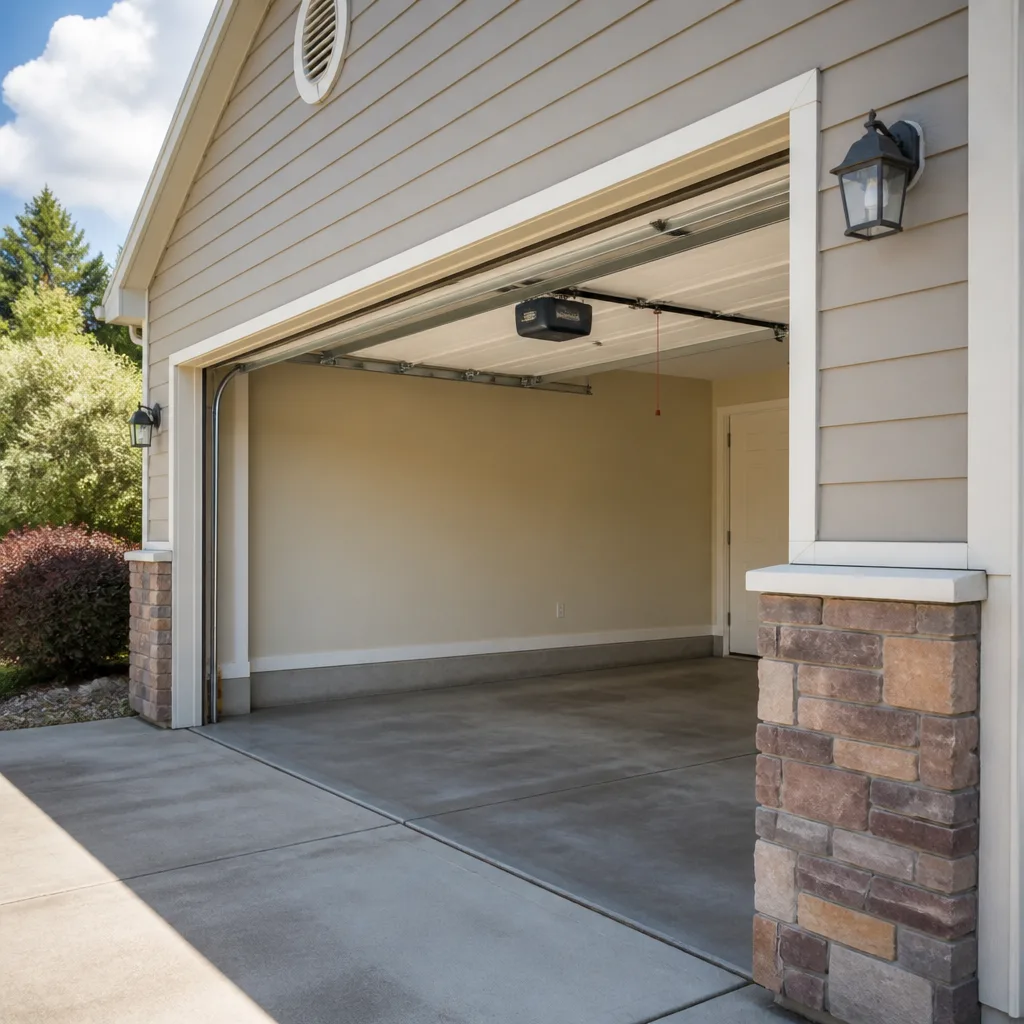
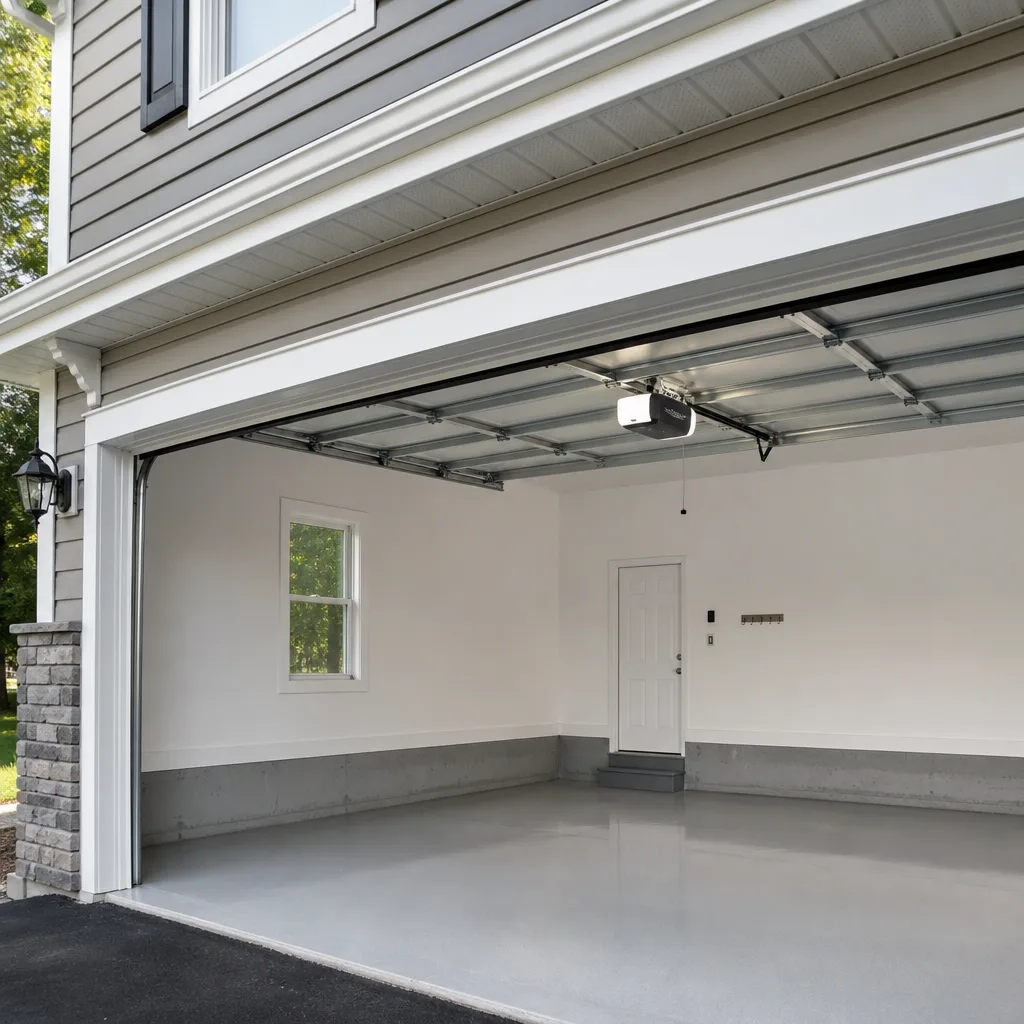
 Before
 After
After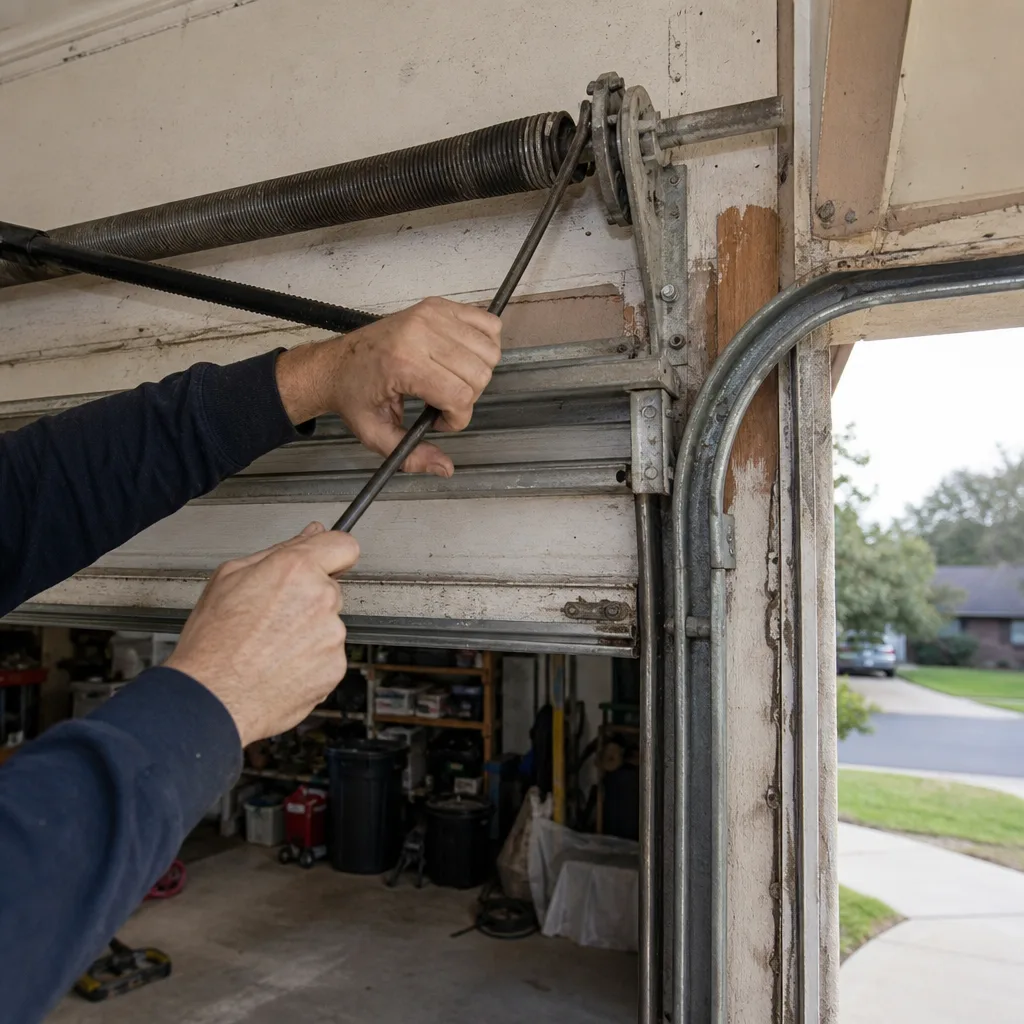 Before
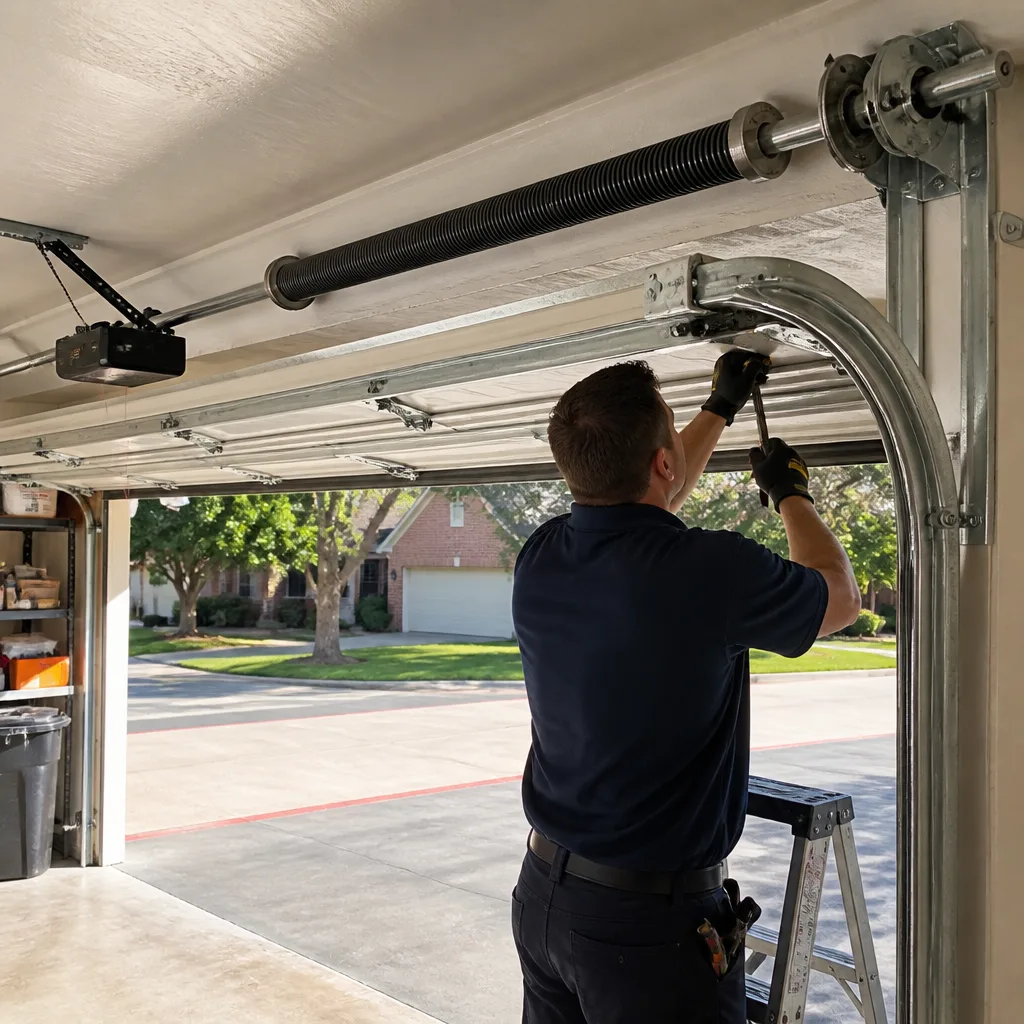 After
After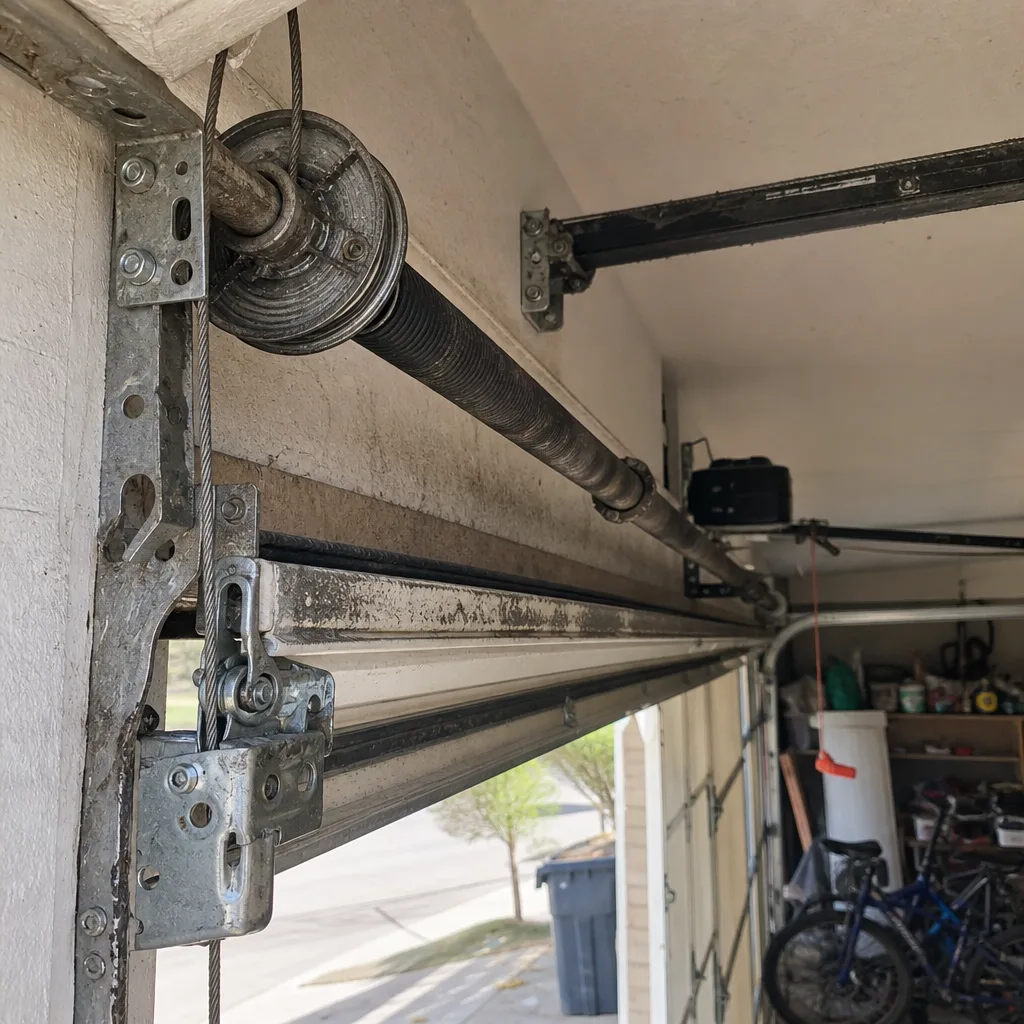 Before
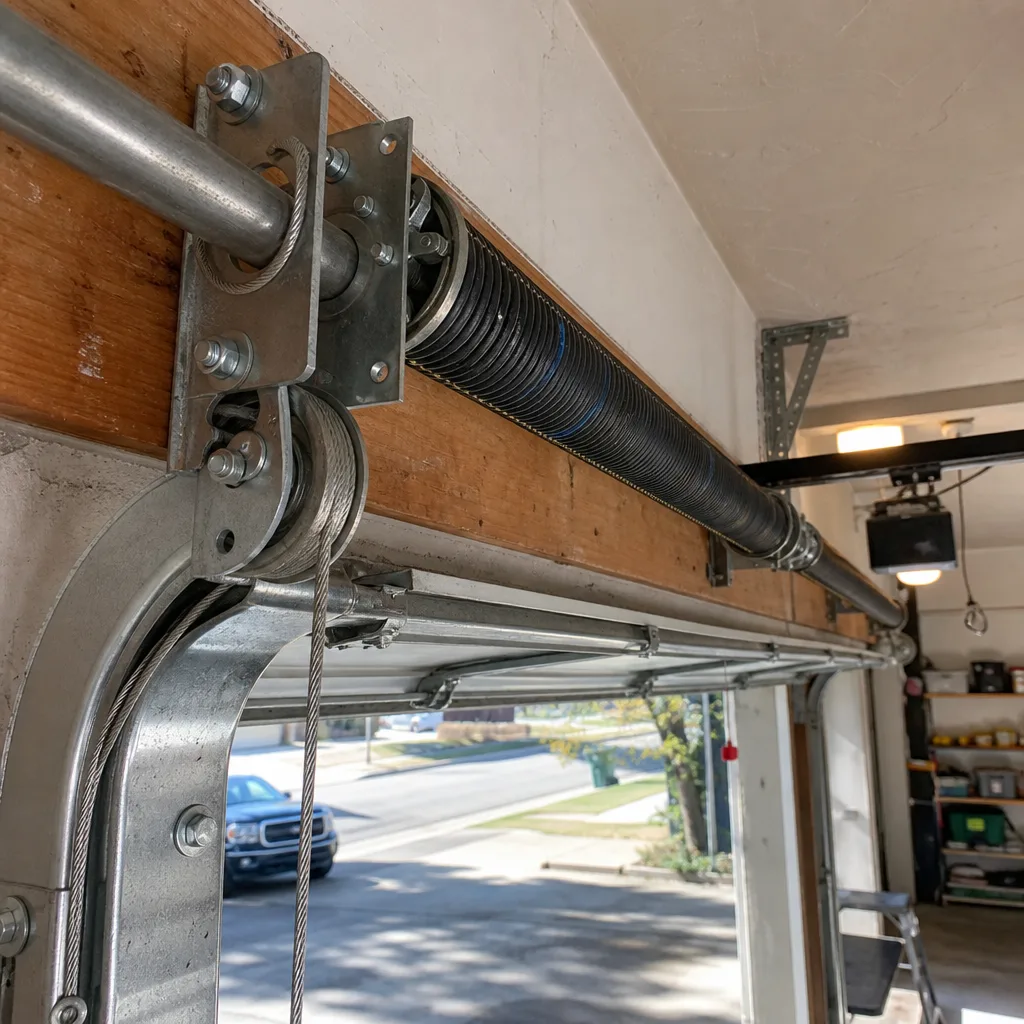 After
AfterSeasonal Garage Door Care for Flower Mound: Year-Round Homeowner’s Guide
Flower Mound doesn’t have four seasons. It has hot, hotter, ice storm, and mud, and each one attacks a different part of your garage door. The February ice storm that hits Flower Mound every two or three years does more door damage in 48 hours than the previous twelve months combined, mostly because nobody has lubricated their springs since October. This guide walks you through what actually happens to your door here each quarter, what to do about it before it fails, and when to pick up the phone instead of a wrench. For a deeper dive, see our The Complete Guide to Garage Door in Flower Mound.
Quick Answer
Seasonal garage door care in Flower Mound means four targeted checkups per year: lubricate springs and rollers before summer heat bakes them dry, inspect seals and test the manual release before winter ice arrives, clear ice from the bottom seal before forcing the opener during a freeze, and document hail damage on panels and tracks every spring before calling your insurance adjuster. Most of this takes under an hour per season and costs less than a single emergency service call.
Table of Contents
- Summer (June-September): Heat, Rollers, and Opener Logic Boards
- Fall (October-November): The Pre-Ice-Storm Checklist
- Winter (December-February): Ice Storms and Frozen Seals
- Spring (March-May): Hail Season and Insurance Documentation
- Year-Round: Irrigation, Rust, and What Your Bottom Bracket Is Telling You
- Common Mistakes to Avoid
- When to Call a Professional
- Frequently Asked Questions
Summer (June-September): Heat, Rollers, and Opener Logic Boards
Flower Mound summers routinely push past 100°F for weeks at a time, and garage interiors bake even hotter than the air outside. A garage that faces west in neighborhoods like Bridlewood or Wellington can hit 120°F by mid-afternoon from late June through early September. That heat doesn’t just make the space uncomfortable. It degrades the materials your door depends on.
Nylon rollers are the first casualty. Most garage doors in Flower Mound run on nylon rollers with steel ball bearings inside. The nylon is durable, but sustained heat plus a dry Texas August causes the bearing grease to thin out and weep away. Once the bearings run dry, the roller starts grinding instead of rolling. You’ll hear it as a rough, gravelly sound when the door moves. Left alone, a seized roller can chew up the track and force the opener motor to work double, which shortens the opener’s life by years, not months.
What to do in early June:
- Run the door and listen. A healthy door should sound smooth, with no grinding or squealing. If you hear metal-on-metal, that’s a dry bearing.
- Lubricate the rollers, hinges, and springs with a silicone-based garage door lubricant. Do not use WD-40. It cleans well but leaves almost no lasting lubrication. You want a product that sticks.
- Check the opener’s logic board. This is the part nobody thinks about until it fails. The logic board is the circuit brain inside your opener motor housing. Sustained temperatures above 110°F inside the garage can cause solder joints to micro-fracture over time. Genie and Chamberlain openers built in the last ten years are more compact than older models, which means less air space around the board and more heat sensitivity. If your opener starts acting erratically in August, like reversing for no reason or not responding to the remote on the first try, the board may be heat-stressed.
- Look at the top panel. Heat causes the panel’s metal skin to expand. If the panel was installed tight against the frame with no clearance, that expansion can cause binding at the top of the track. A door that hesitates or jerks near the fully open position in summer but runs fine in cooler weather is often a heat-expansion issue.
In our experience, the best thing you can do for summer door health is lubrication before the first 100°F week. A $9 can of silicone lubricant applied in early June prevents more August breakdowns than any other single step. We’ve been doing garage door repair in Flower Mound since 2004, and I can count on one hand the number of doors with fresh lubrication on the rollers that still had a summer failure.
Fall (October-November): The Pre-Ice-Storm Checklist
The smartest homeowners in Flower Mound aren’t the ones who react to an ice storm. They’re the ones who spend one Saturday afternoon in late October doing the five things that make an ice storm boring. Because when the freeze hits, your door is either ready or it isn’t, and parts stores sell out of the common pieces within hours.
Here’s the pre-ice-storm checklist, in order of importance:
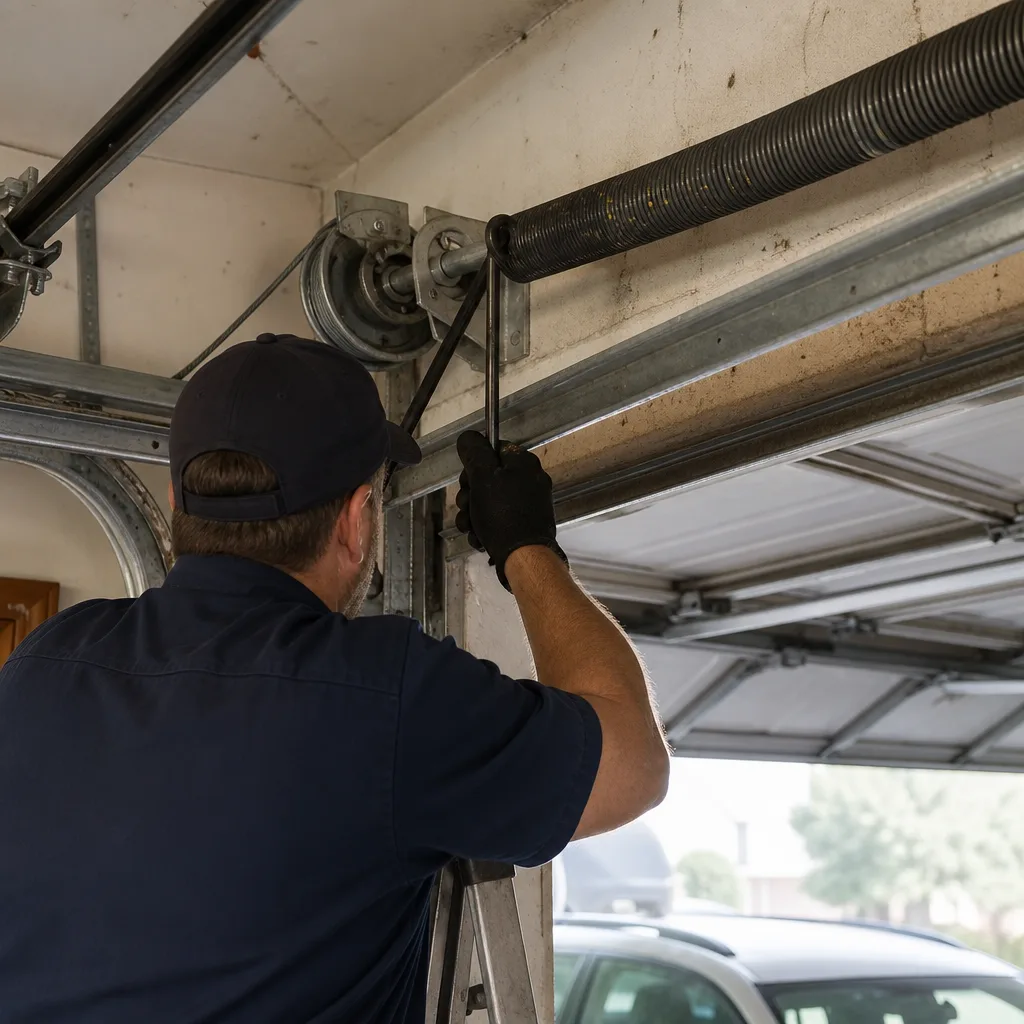
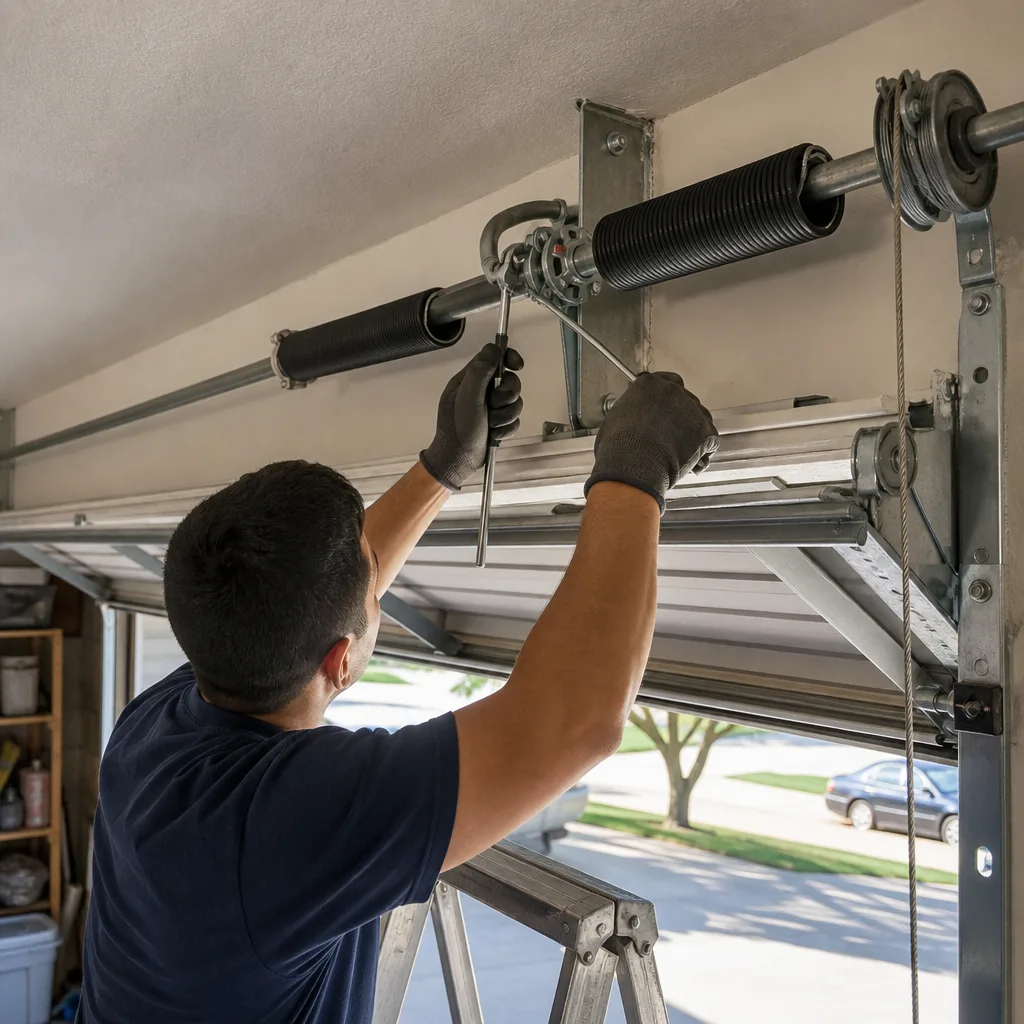
- Lubricate the torsion springs. The springs are under constant tension, even when the door is closed. Dry springs bind against themselves as the coils shift during operation. That binding creates friction points that concentrate stress in a single spot on the coil, and that’s where the spring snaps when it fails. In Flower Mound, the dry winter air after October makes springs more brittle. A spring that’s been lubricated twice a year, once in spring and once in fall, runs cooler and lasts longer than one that’s been left dry since the day it was installed.
- Inspect the bottom seal. The rubber strip along the bottom of your door is called the astragal or bottom weather seal. Run your hand along the inside and outside of it. Look for cracks, splits, or spots where it’s pulling away from the bottom panel. A torn seal lets cold air and, worse, ice form directly against the bottom panel and concrete. When that ice bonds the seal to the driveway, forcing the door up can tear the seal right off.
- Test the manual release. Pull the red emergency release cord so the door disengages from the opener carriage. Lift the door by hand. It should raise smoothly and stay up when you let go at waist height. If it wants to drop, the springs are weak or out of balance. Fix that now. If an ice storm knocks out power and you need to get your car out, a properly balanced door opens by hand without drama.
- Check the weatherstripping on the sides and top. The vinyl trim around the outside of the opening, what we call the jamb seal, shrinks in cold weather. If it was caulked or nailed in place during summer, it may pull away in November, leaving a gap. Cold wind and ice get through that gap and into your garage.
- Look at the cables. The cables on either side of the door connect the bottom brackets to the springs. They’re made of braided steel and they live next to the tracks, so they collect dust and car exhaust film. Run a dry rag along each cable and look for frayed strands, rust, or kinks. A frayed cable under tension is a failure waiting for the worst possible moment.
Do all five of these in one afternoon before Thanksgiving. If you find something wrong, call before the first freeze, because once the ice storm is in the forecast, you’re competing with every other homeowner in town for the same service window.
Winter (December-February): Ice Storms and Frozen Seals
This is the section that matters most to Flower Mound homeowners, because winter here is not Minnesota winter. It’s 34°F and raining at 11 p.m., then 28°F and clear at 3 a.m. That’s the scenario that freezes your bottom seal to the concrete driveway. And here’s what happens next, the part nobody warns you about.
You press the opener button at 7 a.m. The opener motor runs. The carriage starts to move. But the door itself is frozen to the ground. The opener doesn’t know that. It pulls against the ice bond until one of three things gives: the ice releases, the opener’s internal gear strips, or the bottom seal tears off the door. In our experience in Flower Mound, middle of a cold February morning, it’s usually the seal that loses, and sometimes the opener gear goes with it.
What to do when you wake up to a frozen door:
- Do not press the opener button again. The first pull did the damage it’s going to do. Repeated attempts make it worse.
- Disconnect the door from the opener. Pull the red release cord. This takes the opener out of the equation so the motor isn’t fighting a door that’s stuck.
- Break the ice bond gently. Use warm water, not hot, not a heat gun, not a blowtorch, and definitely not a chisel you found in the garage. Warm tap water poured along the bottom seal works in three to five minutes. It takes longer than you’d like, but it doesn’t damage the seal or the concrete.
- Clear the standing water. Once the door is free, squeegee or sweep the water away from the bottom of the opening. If you leave it, it refreezes and you’re back where you started.
- Before you reconnect the opener, test the door by hand. Lift it manually. It should move freely. If it’s still heavy or reluctant, the springs or rollers may have been damaged by the earlier strain.
Prevention is simpler than the fix. In late November, spray a thin coat of silicone or even plain cooking spray along the bottom seal where it meets the concrete. It creates a barrier that water can’t bond to. Reapply after every rain event when the temperature is hovering around freezing. It takes thirty seconds and saves you a morning of misery.
And a note on ice storms specifically: Flower Mound gets one serious ice event every two or three years on average. The 2021 freeze is still fresh in everyone’s mind, and we spent the week after it replacing seals, openers, and springs that failed because doors were forced while frozen to the ground. A door is 200 pounds riding on two springs. Respect it, especially when ice is involved.
Spring (March-May): Hail Season and Insurance Documentation
North Texas hail season runs from March through May, and Flower Mound sits squarely in the path of the big storms that roll through Denton County every spring. Golf-ball-size hail and larger is common enough that most homeowners here have made at least one roof claim. What gets ignored in the aftermath is the garage door.
Your garage door faces the street. That means it takes hail directly on the panels, the window inserts if you have them, and the decorative hardware. Even if your roof handled the storm without visible damage, your door panels may have dents that compromise both the look of your home and the structural integrity of the door.
Here’s how to handle post-storm inspection:
- Photograph everything within 24 hours. Use your phone, take pictures of every panel from multiple angles, the window inserts, the track, and the opener. Insurance adjusters respond to documented evidence, and hail damage is easier to prove with fresh photos before rust starts on the bare metal spots.
- Run the door and listen for changes. Hail doesn’t just dent panels. It can knock the door out of square, bend the tracks slightly, or break the seal between panels. Run the door three or four times and listen for any new scraping, grinding, or hesitation.
- Check the panel joints. The seams between panels are where most hail-related failures happen. Look at the seam from the side. If it isn’t straight, if it bulges, or if the weatherstrip between panels is coming out, that’s real damage.
- Call your insurance agent before you call a door company. Most homeowners policies in Texas cover hail damage to garage doors. The process works best if you have photos and an adjuster scheduled before any repair work starts. Once the door is repaired or replaced, it’s harder to prove what the storm did.
- Do not wait a month. Hail-damaged panels with exposed metal start rusting quickly, and rust is not covered by insurance. A claim filed in April gets processed while the damage is fresh. A claim filed in June raises questions.
If the adjuster approves a replacement, you have options. This is a good time to look at a full garage door installation in Flower Mound rather than just patching panels. A new Clopay or Amarr door with a proper insulation rating and a fresh bottom seal handles the next ice storm and the next summer better than a patched fifteen-year-old door.
Spring is also the time to schedule maintenance. The post-storm inspection is a natural moment to have the springs checked, the opener serviced, and the tracks aligned. We do a lot of this work in April and May, once the hail season quiets down and before the summer heat arrives.
Year-Round: Irrigation, Rust, and What Your Bottom Bracket Is Telling You
Most garage door maintenance guides stop at seasonal checklists. The ones that miss what we see every week in Flower Mound skip two things: lawn irrigation and rust patterns. Both of them tell you more about your door’s health than any checklist.
Irrigation and your door hardware. If your sprinkler heads spray the lower panels and bottom brackets three mornings a week, you are watering the metal parts of your garage door. Flower Mound’s water is hard, and when it evaporates off the bottom brackets, hinges, and track bolts, it leaves mineral deposits. Those deposits hold moisture against the metal and accelerate rust. We see doors with perfect panels and lower brackets rusted through because a sprinkler head six inches out of alignment has been misting the door for two summers.
What to check:
- Watch your sprinklers run once. If the spray pattern touches the garage door at any point, adjust the head or change the nozzle. A ten-minute adjustment saves you a bracket replacement.
- Look at the bottom bracket on each side of the door. That’s the metal L-shaped piece that connects the cable to the bottom corner of the door. It’s the most rust-prone part on any garage door in Flower Mound. Brown staining or flaking metal means moisture is getting to it.
- If you store fertilizer or pool chemicals in the garage, keep them off the floor near the door. The fumes and dust from these products are corrosive to metal springs and cables.
Rust on the bottom bracket. The rust pattern tells a story. If the bracket is rusty on top but clean underneath, water is running down the wall or the jamb and dripping onto it, which means your side seal or the top edge of the door is leaking. If the bracket is rusted from the bottom up, water is wicking up from the concrete, which means your bottom seal is failing or your sprinkler is the culprit. If both brackets are rusted but one is worse, check which direction the prevailing wind blows rain against the door.
The fix depends on the cause, not just the bracket. Replace the bracket, yes, but also fix the water source or you’ll replace it again in two years. A rusted bottom bracket is a safety issue, not a cosmetic one. The cable attaches to it, and when that bracket fails, the cable whips loose under spring tension. That’s the kind of failure that puts a hole in a garage wall or worse.
Opener strain and irrigation. One more thing about sprinklers: if your door gets misted on one side every morning, that side of the door gets slightly heavier. It’s marginal, but over hundreds of cycles, an opener that’s pulling a slightly unbalanced door wears faster on one side of the motor housing. If your door has been drifting in one direction or the opener sounds different in the last few months, check the sprinkler coverage at the same time you’re checking the springs.
Common Mistakes to Avoid
- Lubricating with WD-40. This is the most common mistake I see in Flower Mound garages. WD-40 is a solvent, not a lubricant. It cleans grime off and then evaporates, leaving your springs drier than they were before. You want a dedicated garage door lubricant, silicone-based, applied twice a year.
- Forcing a frozen door. This is the one that costs real money. Pressing the opener button repeatedly while the bottom seal is frozen to the driveway strips opener gears and tears seals. If the door doesn’t move, release it and deal with the ice first.
- Ignoring a squealing spring. A spring that squeals when the door moves is a spring that’s dry and working with friction. That friction creates heat at the coil contact points, and heat concentrating in one spot is what eventually snaps a spring. A $9 can of lubricant in October is cheaper than a spring replacement in January.
- Skipping hail documentation. Within a year, a hail-dinged panel stops looking like hail damage and starts looking like normal wear. Your insurance adjuster can tell the difference for about a season. After that, it’s your word against their file, and they have the file.
- Waiting on a torn bottom seal. A torn seal lets water under the door every time it rains. The water sits against the panel and the concrete, causing rust and delamination. In Flower Mound, with our rain-then-freeze winter pattern, a torn seal becomes a frozen door in the winter. Fix it when you see it.
- Treating the opener as the source of every problem. When a door is struggling, the opener gets blamed. Most of the time, the problem is the door itself, springs, rollers, balance, or tracks, and the opener is the symptom. A door that’s heavy because the springs are tired wears out openers faster. Fix the door and the opener stops struggling. If the opener is straining, the problem is almost never the opener.
- Ignoring the manual release cord. That red cord hangs there for a reason. Test it twice a year. If it doesn’t release smoothly or the door is too heavy to lift by hand, that’s information. Better to find out on a sunny April afternoon than during a February power outage.
When to Call a Professional
Most of this guide is about what you can do yourself. Some things are not. Torsion springs are under enough tension to kill or maim if they fail while you’re adjusting them. Cables are the same story. If your spring snaps, if a cable frays, if the door comes off its tracks, or if the opener’s logic board fails, that’s a call to a trained pro. Even if you’re handy, the risk on the spring end of this work is not worth the savings. We charge a fair price and I stand behind the work, but my main concern is that you don’t get hurt trying to save money on a spring.
We have been doing garage door work in Flower Mound since 2004, and I will be the one who answers the phone when you call. The truck that shows up has my name on the side, and the invoice has my name on the bottom. Otto’s Garage Door offers free estimates in Flower Mound, and I quote the price on the phone before we ever head your way. Call (817) 631-5388 and I’ll tell you what’s wrong, what it costs, and whether it’s worth fixing or replacing.
Frequently Asked Questions
Twice a year, once in spring around April and once in fall around October. The spring service checks for hail damage from storm season and prepares the door for summer heat. The fall service lubricates the springs and inspects the seals before freezing weather arrives. Most of what a service includes takes a technician under an hour, and it catches the small failures before they become emergency calls.
A basic tune-up and lubrication visit in Flower Mound typically runs $90 to $150, depending on what needs attention. For full pricing details, see our Garage Door Cost Breakdown: The Flower Mound Homeowner’s Reference for 2026. Replacing a bottom seal adds $70 to $130, roller replacement runs $8 to $15 per roller installed, and a spring replacement is $200 to $400 depending on the spring rating and type. Every quote is agreed before work starts, and the price doesn’t change when the truck arrives. Call (817) 631-5388 for an exact quote. Estimates are free.
Yes. We answer the phone live, 24/7, and for most garage door repairs in Flower Mound we can be at your house the same day, often within a few hours. Emergency calls for snapped springs or doors that won’t close take priority because a door that’s stuck open isn’t just inconvenient, it’s a security hole in the front of your house. If it’s 9 at night and your spring lets go, I’ll be the one who answers the phone and quotes the repair.
No. I quote the price on the phone based on what you tell me, and I hold that number when I get there. If I find something else that needs attention, I’ll show you and tell you what it costs before I touch it. There’s no surprise invoice at the end. That’s a promise, and it’s in writing on every job.
Yes. Our trucks carry springs, rollers, seals, cables, openers, and hardware so most repairs are done in a single visit. If a specific panel or custom door needs to be ordered, I’ll tell you before the visit ends, and you’ll know exactly when to expect it and what it costs. We work on all the major brands you’re likely to have: LiftMaster, Chamberlain, Genie, Clopay, Amarr, Wayne Dalton, and Craftsman.
Don’t press the opener button. Pull the red release cord to disconnect the door from the opener, then pour warm water, not hot, along the bottom seal to break the ice. Once the door is free, wipe or sweep the water away so it doesn’t refreeze. Spray a thin coat of cooking oil or silicone along the bottom seal before the next freeze, and you’ll avoid the problem entirely. If the seal tears or the door won’t lift after you’ve cleared the ice, call (817) 631-5388 and we’ll come out.
The Bottom Line
Flower Mound eats garage doors in four distinct ways, one per season: summer heat dries out rollers and cooks opener boards, fall neglect leaves springs unlubricated before the first freeze, winter ice bonds seals to driveways and tempting openers into self-destruction, and spring hail dents panels that then rust out of sight. A homeowner who spends thirty minutes per season on the checklist in this guide avoids most of the expensive failures. For more guides & resources, visit our blog. The ones who call before the emergency always save money. I’ve been doing this work in Flower Mound since 2004, and the pattern hasn’t changed: the door that gets maintained in October is the door that opens fine in February.
If you want someone to do the seasonal work for you, or if you just found something wrong while reading this, call us at Otto’s Garage Door home or reach me at (817) 631-5388. Free estimates, real answers, and the price I quote is the price you pay. If you need a new garage door opener in Flower Mound, we’ll help you pick the right one and install it, tested and backed by the 90-Day Done Right Promise, in writing, on every job.
Written by Otto Reinhardt, Owner at Otto’s Garage Door, serving Flower Mound since 2004.