
Last updated September 10, 2026
Full 25-point door and opener safety check with every visit - springs, cables, rollers, tracks, and your LiftMaster or Chamberlain opener included
You get a price before we start. It does not change when the truck arrives.

 Before
 After
After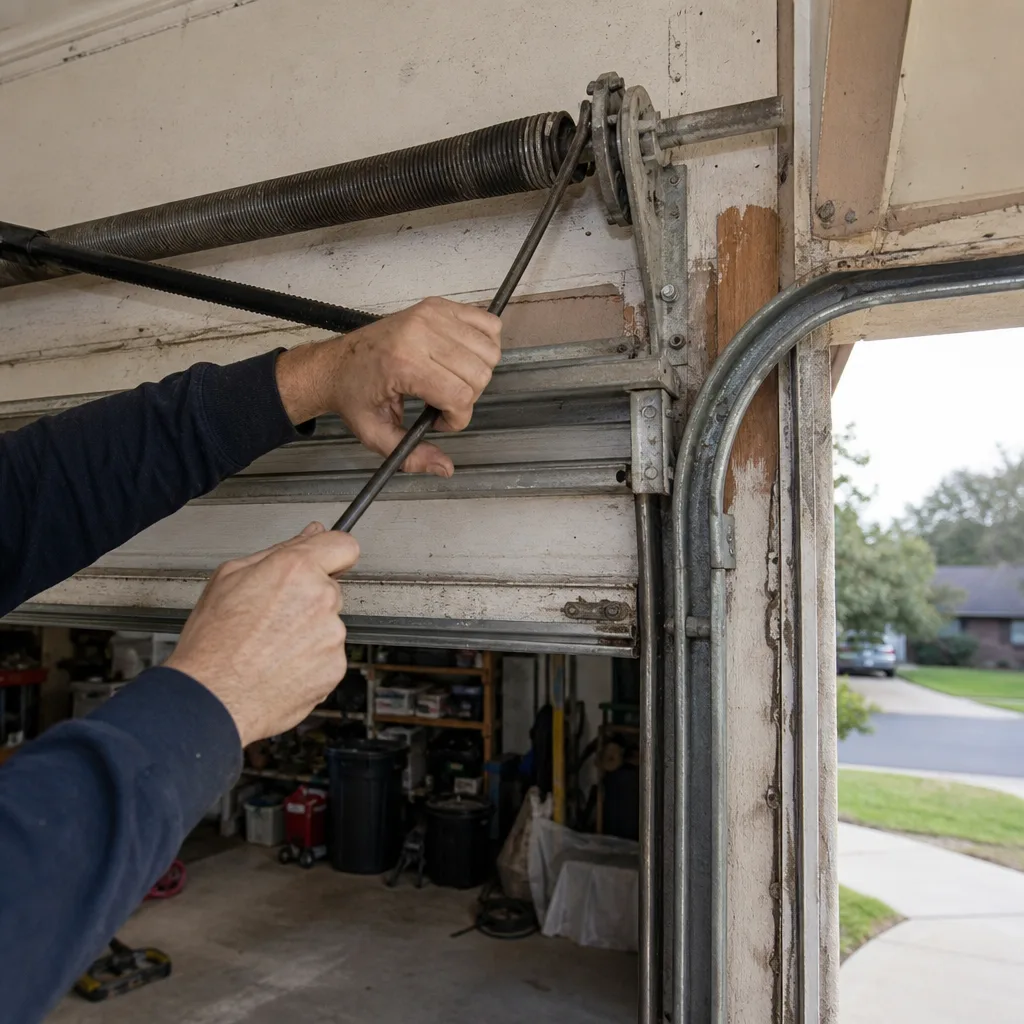 Before
 After
After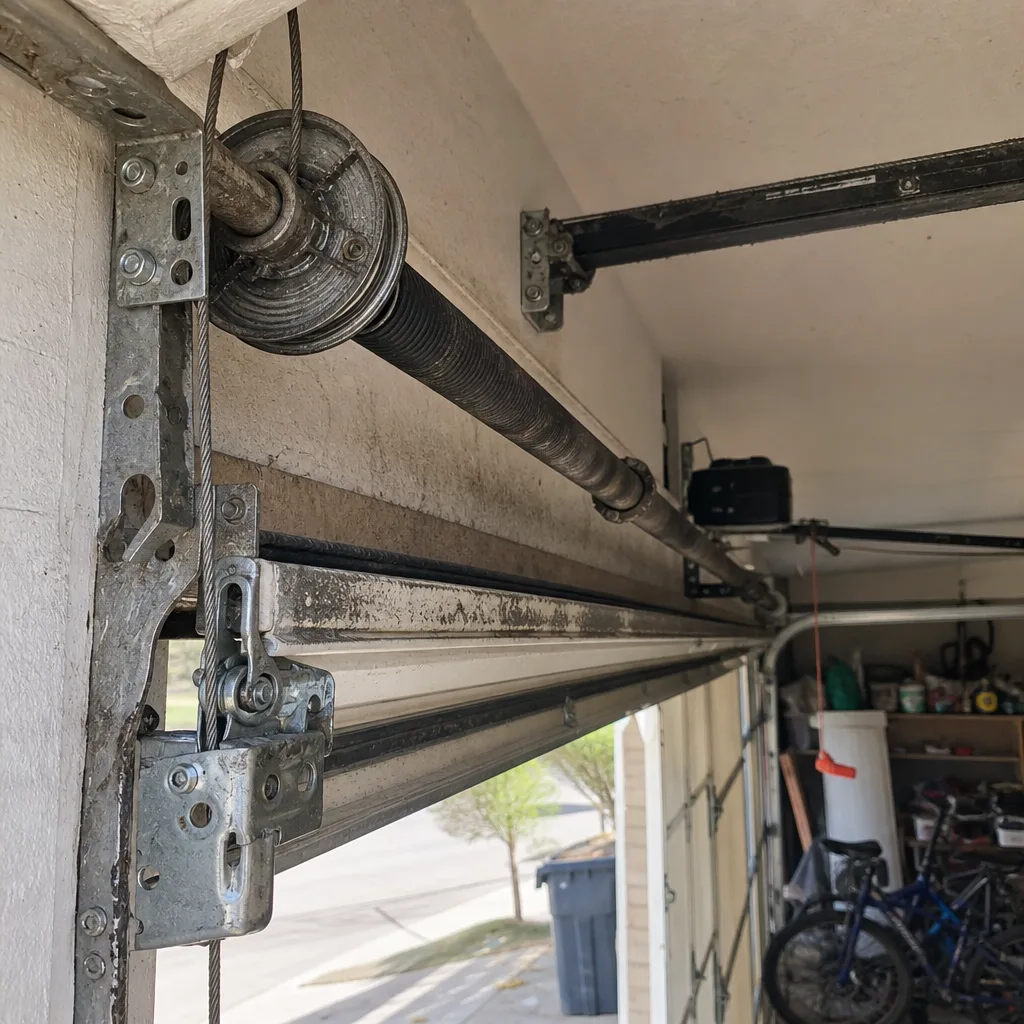 Before
 After
AfterGarage Door Warning Signs: A Flower Mound Homeowner’s Reference Guide
Here’s something most Flower Mound homeowners don’t realize until it’s too late: your garage door talks to you for weeks before it actually fails. A torsion spring doesn’t snap without warning. It grinds, it slows the door down, it shows visible gaps in the coil. Most people just turn up the radio. This guide covers every sound, movement, and smell your door makes when it’s asking for help, and which ones mean you’re days away from a car trapped inside at 7 a.m. on a workday. For a deeper dive into keeping your system reliable year-round, see our Seasonal Garage Door Care for Flower Mound: Year-Round Homeowner’s Guide.
Quick Answer
The most common garage door warning signs in Flower Mound are a door that’s slower than it used to be, grinding or clunking sounds during operation, visible gaps in torsion springs, fraying cables, and a door that hesitates or reverses mid-travel. Slow operation with grinding sounds means a spring is losing tension and could snap within days. If you notice any of these, call Otto’s Garage Door at (817) 631-5388 for a free estimate before the door stops moving entirely.
Table of Contents
- Is Your Door Slower Than It Was Six Months Ago?
- The Grinding Sound: What It Means and Why You Can’t Wait
- Rhythmic Clunking: Roller Problems vs. Bent Track Problems
- Fraying Cables: The 10-Second Visual Check That Prevents Catastrophe
- Why Your Door Reverses Unexpectedly (And How to Tell If It’s Serious)
- The Smell Test: Burning Plastic vs. Hot Metal
- Common Mistakes to Avoid
- When to Call a Professional
- Frequently Asked Questions
- The Bottom Line
Is Your Door Slower Than It Was Six Months Ago?
A garage door that’s lost speed is the single most ignored warning sign we see in Flower Mound. Homeowners chalk it up to cold weather, age, or just being “one of those things.” But here’s the truth: a door is 200 pounds riding on two springs. When those springs start losing tension, the opener has to work harder to lift the same weight, and the door moves slower. That’s not friction. That’s a countdown.
The average torsion spring in North Texas is rated for about 10,000 cycles. One cycle is one open and one close. For a family that opens the door four times a day, that’s roughly seven years. Flower Mound’s heat accelerates metal fatigue, so springs in this area often fail before that mark. When you notice the door taking four seconds longer than it used to, the spring has already lost meaningful tension.
How do you tell the difference between a door that’s slow from friction and one that’s slow from spring fatigue? Here’s the test we run at Otto’s Garage Door:
- Pull the emergency release cord when the door is closed. Stand to the side, not under the door.
- Lift the door manually. A properly balanced door should lift with one hand and stay up on its own about three feet off the ground.
- If it’s heavy or drops back down, the springs are done. That’s urgent. Call before it snaps.
- If it lifts easily but the opener still strains, you have a friction problem: dirty rollers, worn hinges, or a track issue. That’s fixable, but don’t ignore it either.
In Flower Mound’s older neighborhoods like Timber Creek and Wellington, we see a lot of doors from the early 2000s with original springs still doing the job. That’s borrowed time. If yours is over seven years old and slowing down, the spring is telling you it’s near the end. I count spring cycles the way you count tire miles. I’ll tell you what’s left on yours when I look at it.
One more thing worth knowing: when the door slows because of spring fatigue, the opener motor runs longer and hotter on every cycle. A $350 spring replacement is cheaper than a spring replacement plus a burned-out opener motor. If you’re in Flower Mound and the door is slower than it used to be, call (817) 631-5388. We’ll quote you on the phone and hold that price at the door.
The Grinding Sound: What It Means and Why You Can’t Wait
Every emergency call I’ve answered in Flower Mound where a car was trapped at 7 a.m. had one thing in common: the homeowner heard a grinding sound for at least two weeks before the spring snapped. Grinding means metal is rubbing against metal under tension. It is the clearest warning your door gives you, and it is never a “wait and see” situation.
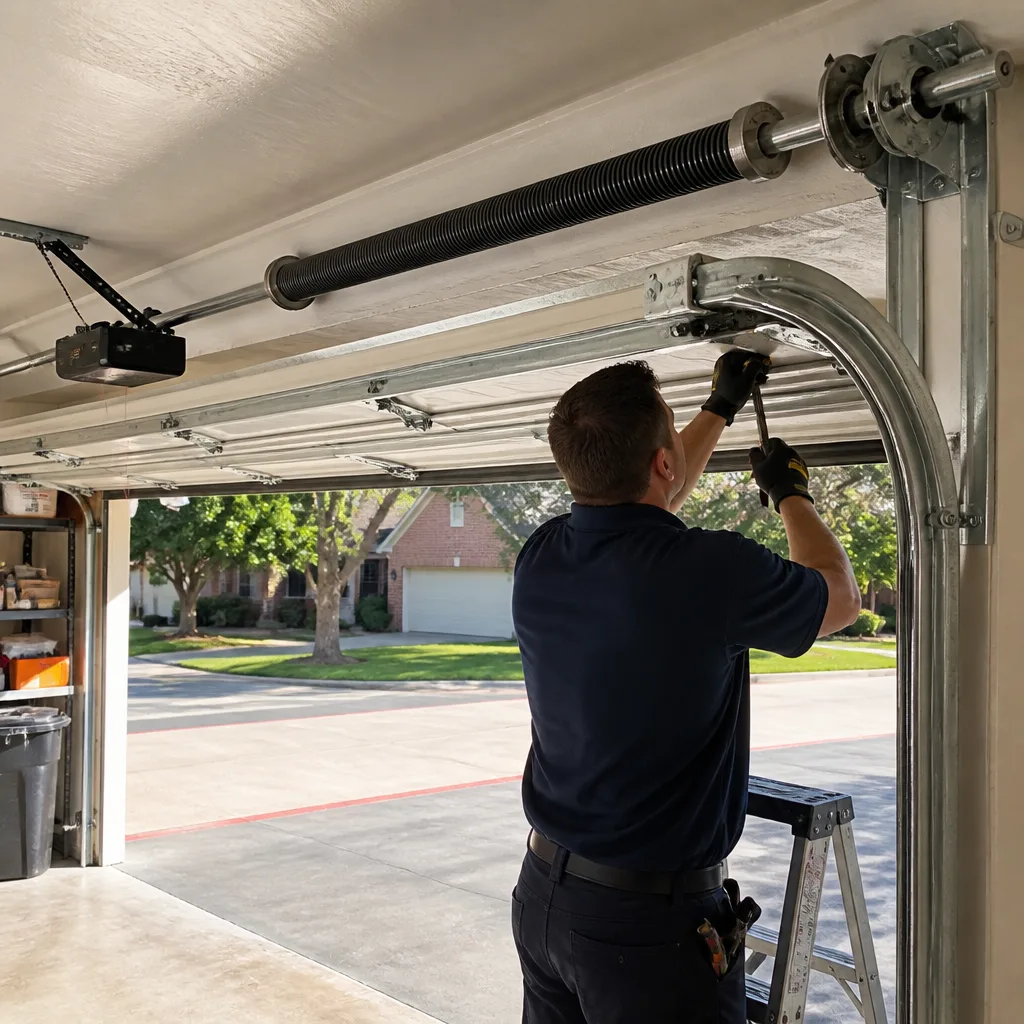
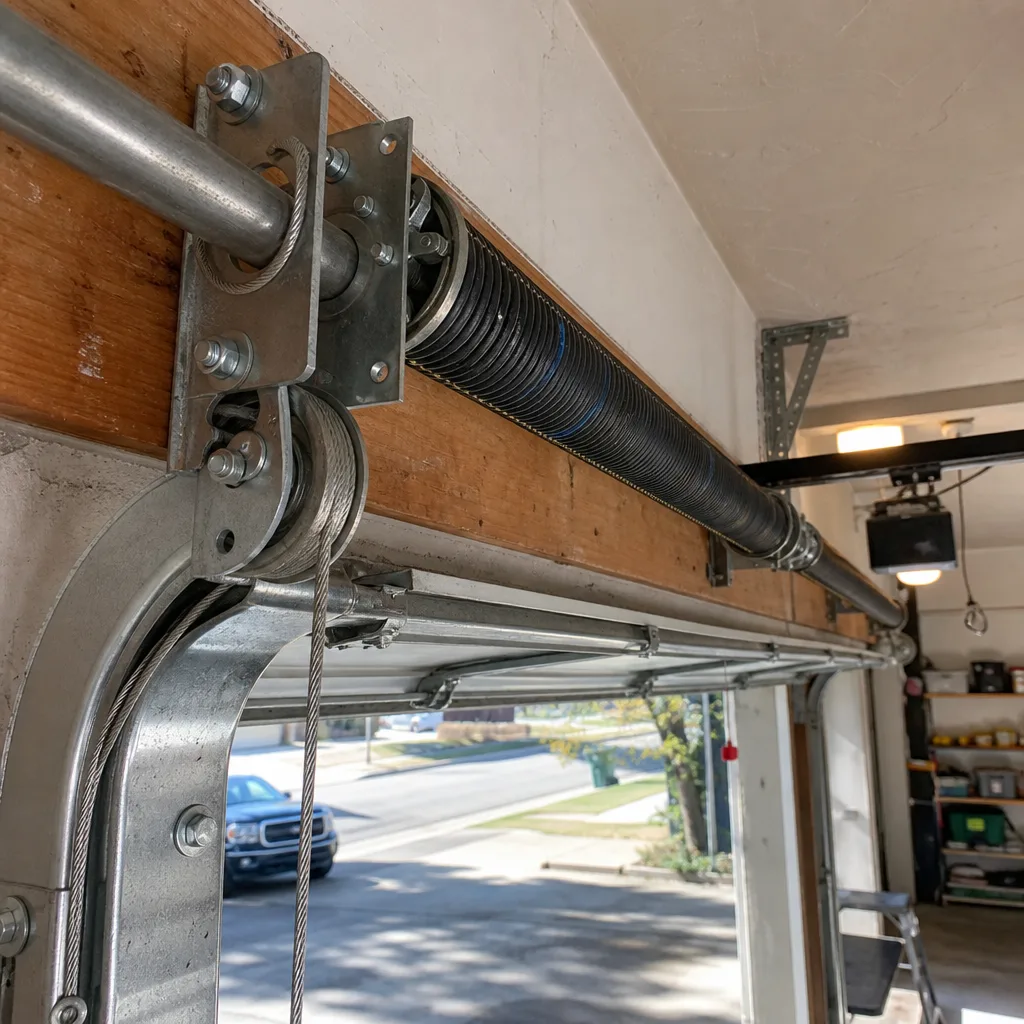
Here’s what’s happening mechanically. Torsion springs sit on a shaft above your door. When they’re healthy, the coils are tight and uniform. As the spring degrades, the coils begin to separate slightly, and when the door moves, those coils rub against each other. That’s the grinding. It’s the sound of a spring tearing itself apart one cycle at a time.
We’ve seen this pattern hundreds of times in Flower Mound. The grinding starts quiet, almost like a radio station that’s not quite tuned in. Then it gets louder over a few weeks. Then one morning the spring snaps with a sound like a gunshot, and the door is on the floor with 200 pounds of dead weight. If your car is inside, you’re not getting to work. If someone is under the door when it goes, we’re talking about a hospital trip, not a repair bill.
The fix is straightforward if you catch it early: the spring gets replaced before it breaks, the opener doesn’t get damaged, and you schedule the repair on your terms. Our Garage Door Repair in Flower Mound service exists for exactly this moment. Otto quotes the job on the phone, shows up when he says he will, and the price doesn’t change between the driveway and the invoice.
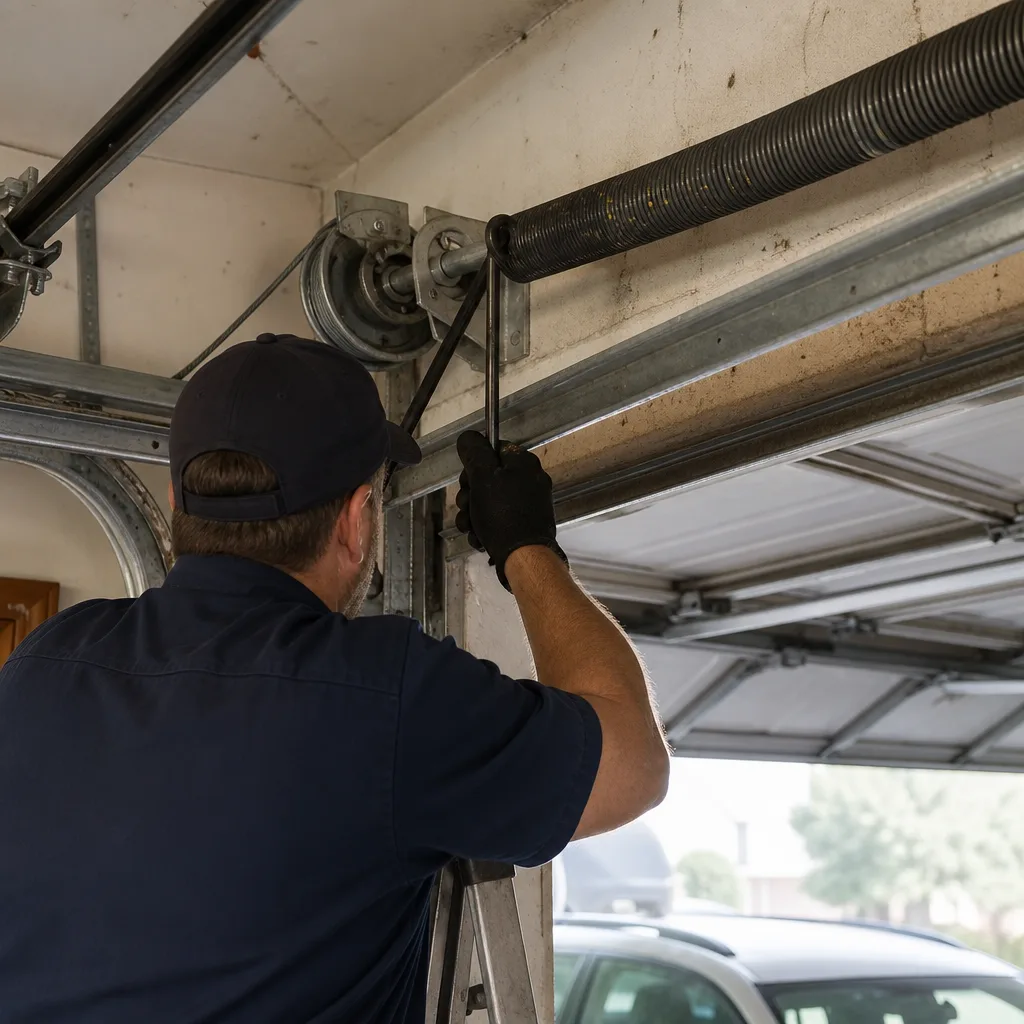
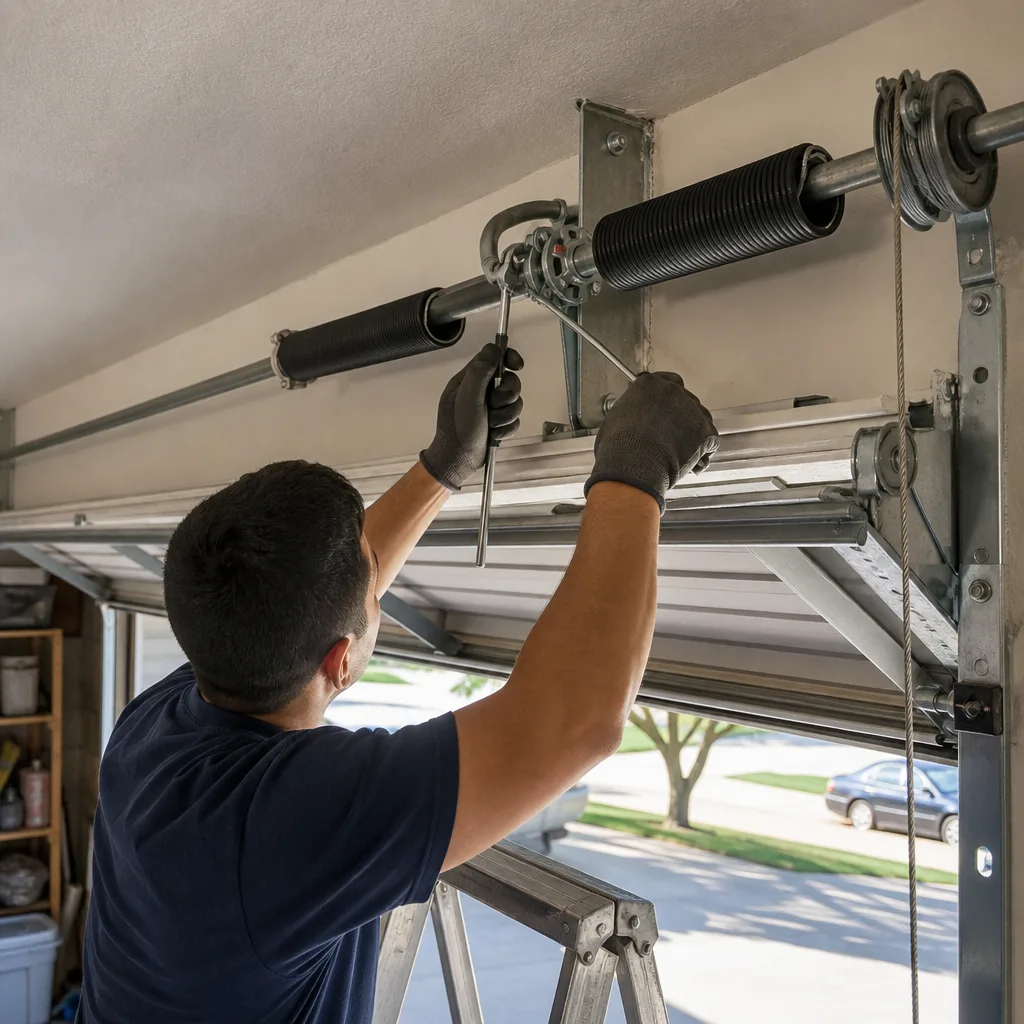
One safety note that deserves saying plainly: do not attempt to replace a torsion spring yourself. The stored energy in a wound spring can break bones or worse. This is genuinely dangerous work that requires winding bars, the right spring for your door’s weight, and a healthy respect for what you’re handling. A door is 200 pounds riding on two springs. Respect it. Call someone who does this every day.
Rhythmic Clunking: Roller Problems vs. Bent Track Problems
A rhythmic clunking sound on the way up or down is one of the few warning signs that has two completely different causes, and the fix is different for each. The good news is you can often tell which one you’re dealing with just by paying attention to when the clunk happens and how regular it is.
Roller problems clunk at regular intervals, matching the door’s speed. Each roller hits a wear point, a flat spot, or a section of track where it’s no longer seated properly, and you hear it as the roller passes that spot. When rollers wear down in Flower Mound’s heat, the nylon coating chips off and the steel bearings inside grind against the stem. The clunking is the roller skipping instead of rolling.
Bent track problems clunk once per cycle, not repeatedly. The door hits the bent section of track, makes a single louder clunk or pop, then keeps going. A bent track in Flower Mound is usually caused by someone backing into the door, a kid’s basketball hitting the lower panel, or years of the door being slightly out of balance and leaning against one side of the track.
Here’s how to tell the difference in about 30 seconds:
- Listen for the rhythm. Regular, repeating clunk-clunk-clunk as the door travels is almost always rollers. A single clunk at the same spot every time is the track.
- Watch the door sides as it moves. If one side dips or the door leans slightly, that’s a track alignment issue. If the door moves straight but sounds rough, it’s rollers.
- Look at the rollers themselves. If you see flat spots, missing nylon, or the wheel wobbling on the stem, those need replacing. This is one you can see from the ground without tools.
Roller replacement is a quick, affordable fix when you catch it early. Worn rollers put extra stress on hinges and the opener, and they will eventually chew up the track itself. A bent track is a different conversation: sometimes it can be straightened, sometimes the section needs replacing. Either way, this is work for someone who has done it before. We do this all over Flower Mound, and the inspection to tell you which problem you have is free.
If you’re hearing a clunk and you can’t tell what’s causing it, call us at (817) 631-5388. We’ll listen to it with you over the phone, give you an honest read on what we think it is, and show up when we say we will.
Fraying Cables: The 10-Second Visual Check That Prevents Catastrophe
Garage door cables do the most dangerous work on the door and get the least attention. A cable snapping is violent. The door can drop suddenly on one side, and depending on where you’re standing, that’s a broken car roof, a smashed workbench, or a serious injury. The thing is, fraying cables are visible for weeks before they snap. You just have to know what to look for.
Here’s the 10-second check. Walk to either side of your garage door and look at the cable that runs from the bottom bracket up to the drum near the top of the door. What you’re looking for:
- Frayed or “hairy” spots where individual wire strands have broken and are sticking out from the main cable.
- Rust or discoloration along the cable, especially near the bottom bracket where moisture sits.
- Any kink or bend where the cable no longer runs straight and smooth.
- Slack in the cable when the door is closed. A healthy cable is taut. A loose cable means something has already shifted.
Flower Mound’s humidity and temperature swings are hard on cables. The metal expands and contracts constantly, and the area near Lake Grapevine traps moisture in the air. Cables that would last eight years in a dry climate often start showing wear at five or six years here. If your garage feels damp or you’ve ever had rust on your door hardware, check the cables more often.
What you should never do is try to replace a cable yourself. The cable works with the spring under high tension. When you remove a cable from a torsion system, the spring can unwind violently. This is pro work, full stop. We’ve replaced cables on doors all over Flower Mound, from the newer builds in Bridlewood to the established homes in Shadow Ridge and The Meadows. It’s a repair we finish fast because we carry the parts on the truck.
If you see any fraying at all, call us at (817) 631-5388. We’ll tell you over the phone what we think you’re looking at, and if we’re right, we’ll replace the cable before it snaps. That’s the whole point of this guide: nobody in Flower Mound should be surprised by a garage door failure. The signs are there.
Why Your Door Reverses Unexpectedly (And How to Tell If It’s Serious)
A door that reverses mid-travel, or refuses to close all the way, is one of the more confusing warning signs because “reversing” sounds like a safety feature doing its job. Sometimes it is. Sometimes it’s the door telling you something structural is wrong. Knowing the difference saves you time and money.
If it’s the sensors: The photo-eye sensors at the bottom of the door tracks are simple devices. They send an invisible beam across the opening. If something blocks it, the door reverses. This is the most common cause of a reversing door in Flower Mound, especially in spring and fall when leaves blow into garages, and in the summer when spiders build webs across the sensor eyes. The fix is usually wiping the lens with a dry cloth and making sure nothing is stacked in front of the sensor. If the sensor’s alignment is off, a small adjustment fixes it.
If it’s structural: When the door reverses with no obstruction and the sensors are clean and aligned, something else is happening. Here’s what to check:
- Does the door reverse at the same point every time? Consistent reversal at the same spot usually means the door is binding there. A track issue, a bent panel, or a spring that’s lost tension and let the door settle crooked.
- Is the door crooked in the opening? Step back and look. If one side is lower than the other, the springs are unevenly worn or a cable has slipped. The opener senses the resistance and reverses.
- Did the reversal start right after a power outage? Some openers lose their force settings and travel limits after an outage. If the door runs fine manually and the sensors are clear, a quick reprogramming usually fixes it. We handle Garage Door Opener in Flower Mound issues like this constantly.
The key distinction: sensor problems are usually fixable in five minutes without tools. Structural problems are not. If you’ve cleaned the sensors, cleared the path, and the door still reverses, the door itself is talking to you. Call before the opener burns itself out fighting the resistance, or worse, before a cable lets go.
One more flower mound-specific thing: our thunderstorms knock out power often enough that we see opener settings get scrambled a few times a year, especially after the spring storm season. If you have a LiftMaster or Chamberlain opener and the door started misbehaving after a storm, mention that when you call. It changes where we look first.
The Smell Test: Burning Plastic vs. Hot Metal
This is the warning sign nobody writes about, and it’s one of the most useful ones you’ll ever learn. Your garage door has exactly two components that can produce a smell when something is wrong, and they smell completely different. One of them means you schedule a repair. The other means you stop using the door today.
Burning plastic smell from the opener motor: This is usually a failing capacitor, a worn gear, or a motor that’s working too hard because the door is out of balance. Openers from brands like LiftMaster, Chamberlain, and Genie all use plastic gears internally as a sacrificial part. When the gear wears down, it slips and the motor spins against the worn teeth, generating heat and that distinct electrical-burning smell. This is the one you can wait on, but only barely. The opener is going to fail, and when it does, the door won’t move. Call soon, but it’s not a same-hour emergency.
Hot metal smell from the spring area: This one is an emergency. A hot metal smell means friction somewhere in the spring or cable system, usually a spring that’s binding against itself or a bearing at the end of the spring shaft that’s seized. When metal runs against metal without lubrication, it heats up fast and the smell is unmistakable: like brakes grinding on a downhill run. This is a predecessor to a spring snapping. If you smell hot metal near your springs, stop using the door and call us immediately.
Here’s a quick reference for what you’re smelling and what to do:
- Smells like overheated electronics: opener motor, capacitor, or gear. Door may still work. Schedule service this week.
- Smells like hot brakes: spring or bearing friction. Stop using the door. Call today.
- Smells like oil or grease: normal. Your door has moving parts that need occasional lubrication.
- Smells like burning dust: common in colder months when the opener runs hot and burns off accumulated dust. Let it cool, keep an eye on it.
- Ignoring the slow door because “it still works.” A slow door means springs are losing tension. Every cycle after that warning is borrowed time. In Flower Mound’s summer heat, that timeline compresses fast.
- Lubricating worn rollers instead of replacing them. Lubrication can quiet a worn roller temporarily, but it doesn’t restore a flat spot or a broken bearing. You’re buying days, not fixing the problem.
- Attempting a DIY spring replacement. This is the one repair where people get seriously hurt every year. The tension in a torsion spring is enough to break bones. Call a pro. The repair costs less than a visit to urgent care.
- Disconnecting the opener when the door is open. If your door is stuck open and you pull the release cord, a door with dead springs will drop hard. Never release a door that isn’t closed unless you have it secured.
- Ignoring a reversing door because “it’s just the sensors.” Sometimes it is. Sometimes it’s a door that’s gone out of balance and is binding. The way to know is to rule out the sensors and test the door manually. If you can’t tell, call.
- Waiting until the door fails to budget for the repair. Spring replacement costs $180 to $340 in Flower Mound. A snapped spring that takes out cables, a panel, or an opener can turn a $300 repair into a $1,200 job. Catch it early.
- Not knowing your door’s service history. Most doors have a manufacture date sticker on the edge of the door. If your springs are original and the door is over seven years old in this climate, you’re in the replacement window.
In Flower Mound, where garage temperatures climb past 110 degrees in summer, opener motors run hotter than they do up north. A failing gear reaches its breaking point faster here. If you smell burning plastic in June, don’t wait for October.
For context on what a full opener replacement involves if it comes to that, see our Garage Door Installation in Flower Mound page. We install all major brands, and we’ll always tell you if a repair beats a replacement.
Common Mistakes to Avoid
When to Call a Professional
Call a professional when you hear grinding, when you see fraying cables or gaps in your springs, when the door is visibly crooked, when it’s heavy to lift manually, or when you smell hot metal near the spring area. These are not conditions that self-correct. Every warning sign in this guide gets worse with use, and the failure point is always the worst possible moment. Otto’s Garage Door offers free estimates in Flower Mound, answers the phone around the clock, and quotes the price before we touch the door. You’ll also find more guides & resources on our blog to help you stay ahead of repairs. Call (817) 631-5388 and we’ll tell you straight what you’re dealing with.
Frequently Asked Questions
Garage door spring replacement in Flower Mound typically costs $180 to $340 depending on the spring size and whether you have one spring or two. The price is quoted over the phone and does not change when Otto arrives. Call (817) 631-5388 for an exact quote. Estimates are free, and we carry the springs on the truck.
Yes. Otto’s Garage Door keeps common springs, cables, and rollers on the truck, so most repairs in Flower Mound are completed in a single visit. For emergency spring failures, we prioritize same-day service because your car is trapped and you need to get to work. Call (817) 631-5388 and a live person answers, even at night.
In Flower Mound’s heat, a standard torsion spring rated for 10,000 cycles typically lasts six to eight years for a family that runs the door two to four times daily. If you’re on year seven and the door is slowing down or grinding, you’re in the replacement window. Replacing the spring before it snaps is cheaper than replacing it after it takes out a cable.
A crooked door means one spring or cable has failed or slipped, and the door is now supported unevenly. This puts dangerous stress on the remaining cable, which can snap and drop the door. Do not use the door. Call a professional in Flower Mound immediately at (817) 631-5388, and we’ll secure the door and quote the repair before any work starts. For everything you need to know about systems in this area, read The Complete Guide to Garage Door in Flower Mound.
Yes. Our trucks are stocked with springs, cables, rollers, hinges, and opener parts for all major brands, including LiftMaster, Chamberlain, Genie, Clopay, Amarr, Wayne Dalton, Craftsman, and Raynor. Most Flower Mound repairs are finished in one trip because the part is already on board. Call (817) 631-5388 to confirm we have what you need.
No. Otto quotes the price on the phone and holds it at the door. The only way a price changes is if we find something additional during the repair, and we’ll show you and get your approval before any extra work is done. No surprises on the invoice, ever. We’ve been serving Flower Mound since 2004 on that handshake.
The Bottom Line
Your garage door tells you when it’s in trouble: it grinds, it slows, it clunks, it reverses, it frays, and it smells. The difference between a $200 roller replacement and a $1,200 spring failure with cables and a panel included is whether you act on the warning signs when they appear. Every emergency call we answer in Flower Mound is a failure that was announced at least two weeks earlier. Listen to the door. If something sounds wrong, feels wrong, or smells wrong, call Otto’s Garage Door at (817) 631-5388. We’ll tell you over the phone what we think and show up when we say we will. And if you’d rather learn more first, start with our Garage Door Repair in Flower Mound page for a rundown of the most common fixes we perform.
Written by Otto Reinhardt, Owner at Otto’s Garage Door, serving Flower Mound since 2004.